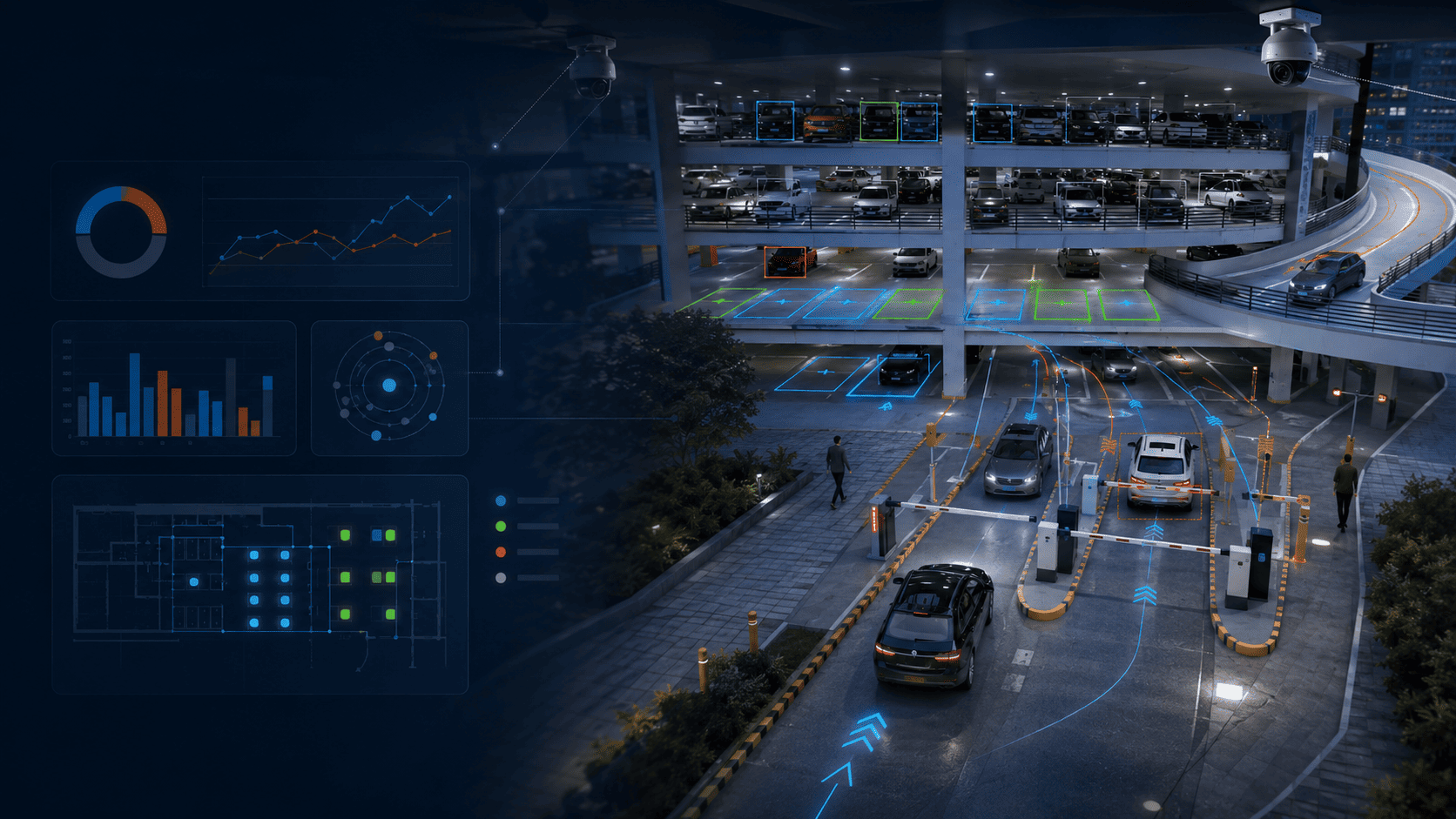
Free spaces are not visible in real time
Drivers search manually, operators miss overloaded zones, and signage quickly becomes outdated.

A unified control layer for free spaces, entry and exit, violations, safety, incidents, fire and smoke using existing cameras, events and integrations.
Cameras already cover entries, levels, passages and payment zones. Video analytics turns that stream into events, statuses, notifications and metrics for operators, security and facility teams.
Drivers search manually, operators miss overloaded zones, and signage quickly becomes outdated.
Congestion near barriers, payment points and ramps affects customer experience, traffic safety and operations.
Parking outside markings, stopping in lanes, misuse of accessible spaces and blocked exits require fast visual evidence.
Accidents, falls, conflicts, fire, smoke and suspicious objects in parking areas cannot rely only on manual monitoring.
Scenarios can be launched step by step: free spaces and entry/exit first, then violations, safety, fire and smoke, followed by a unified control center.
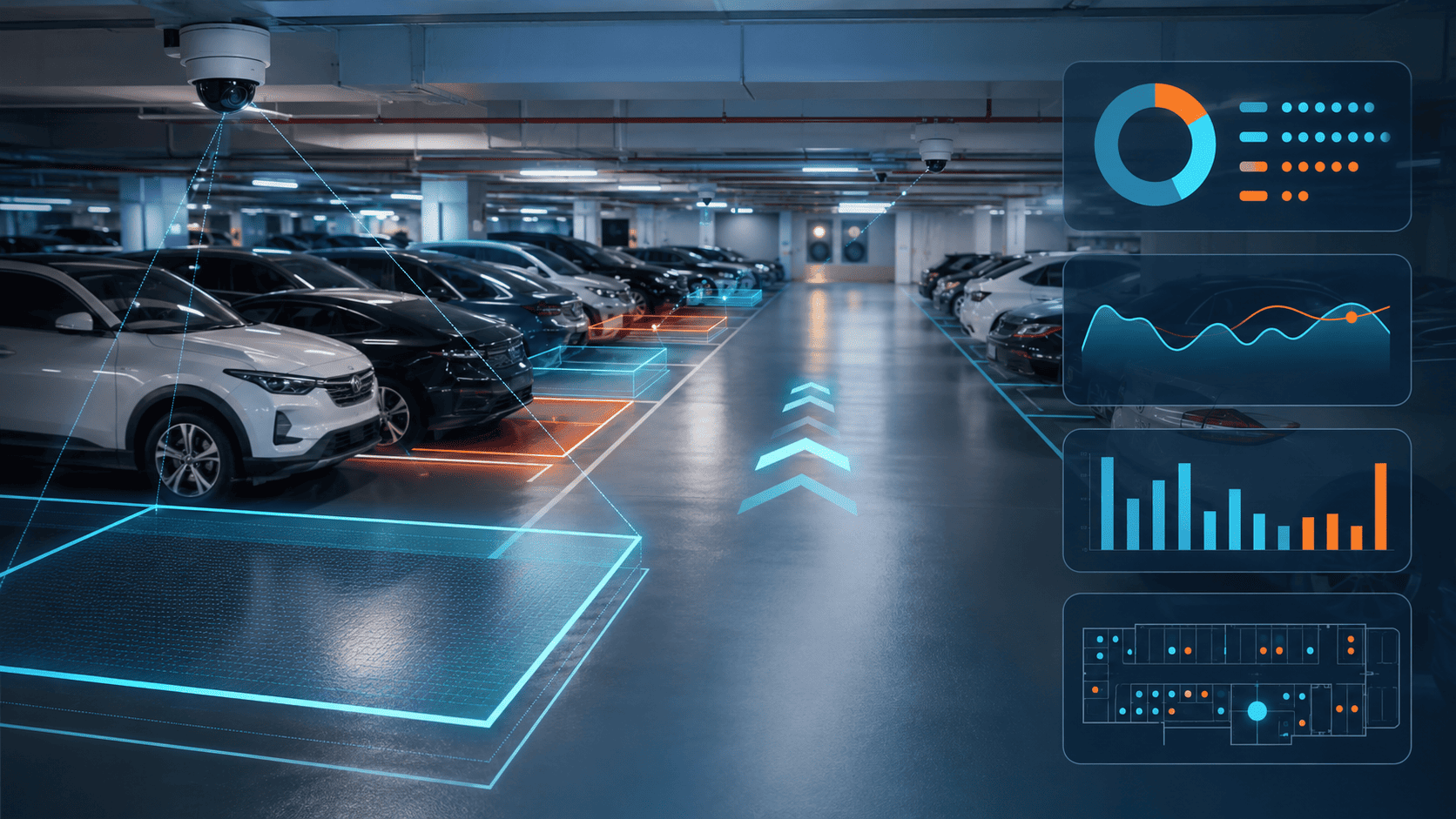 Spaces
Free spaces, zone occupancy, floors, rows and overloaded areas.
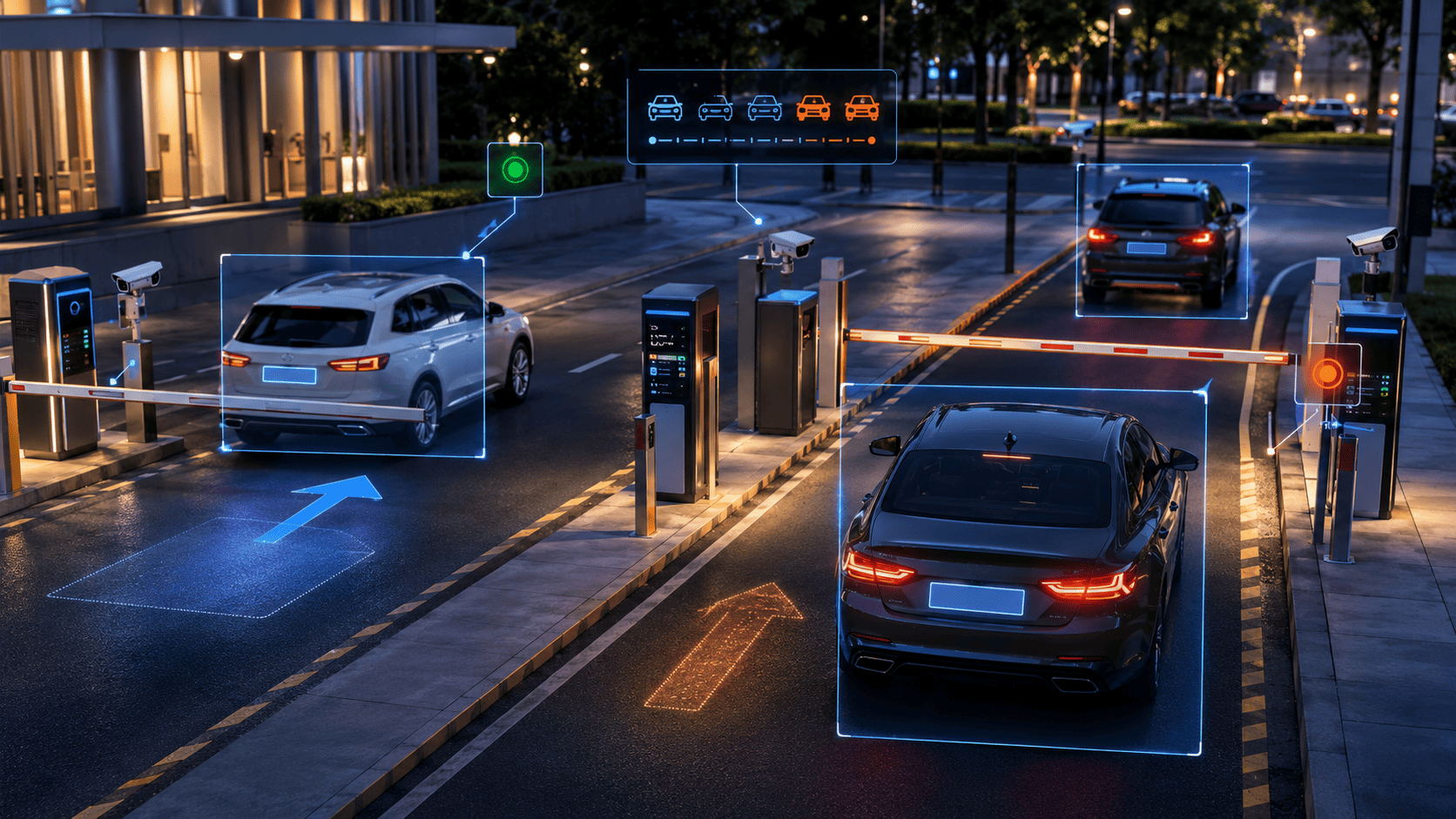 Entry / exit
Vehicle flow, barriers, ramps, payment points, delays and exit queues.
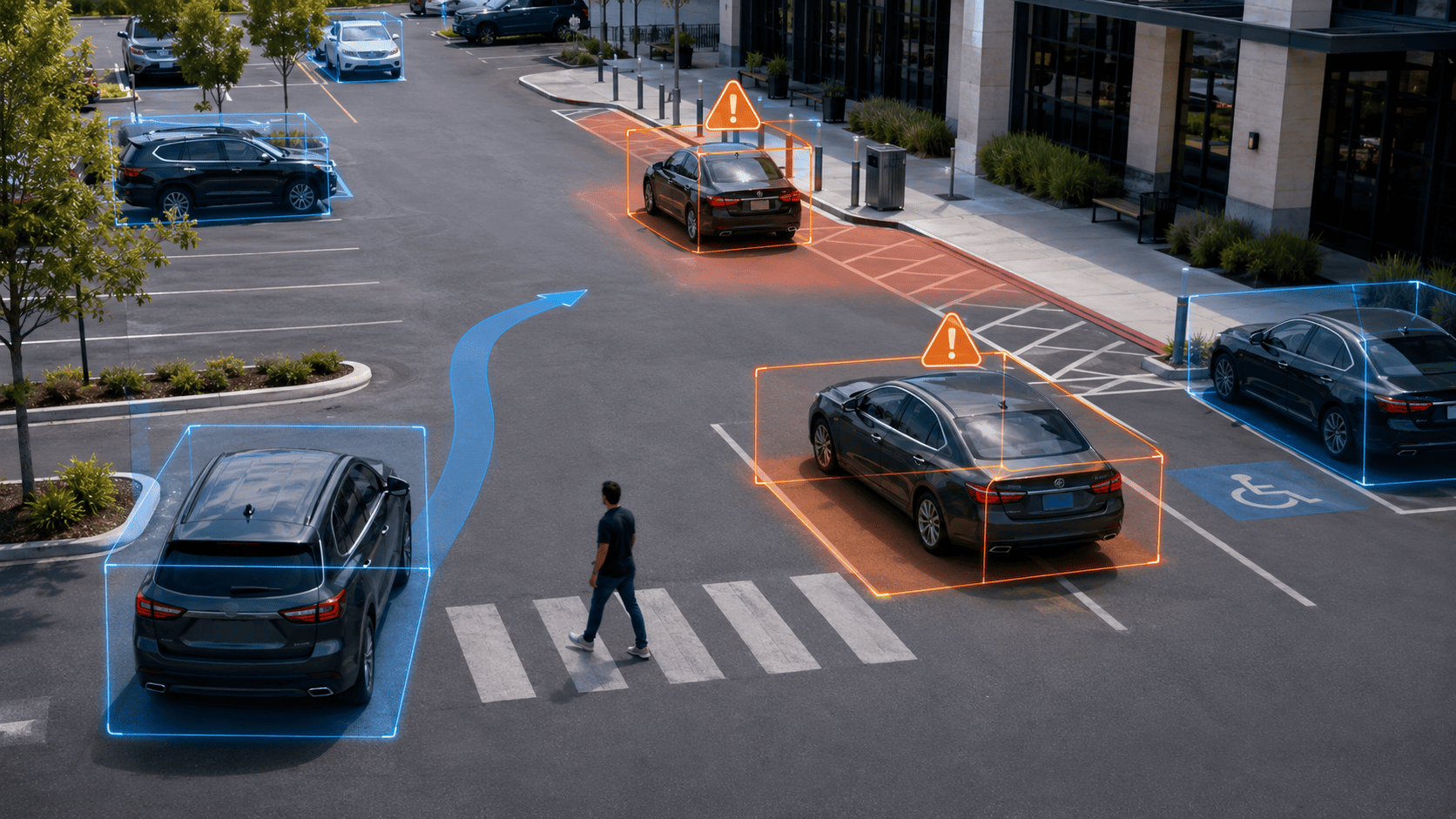 Violations
Parking outside markings, blocked lanes, misuse of reserved spaces and stopping in restricted zones.
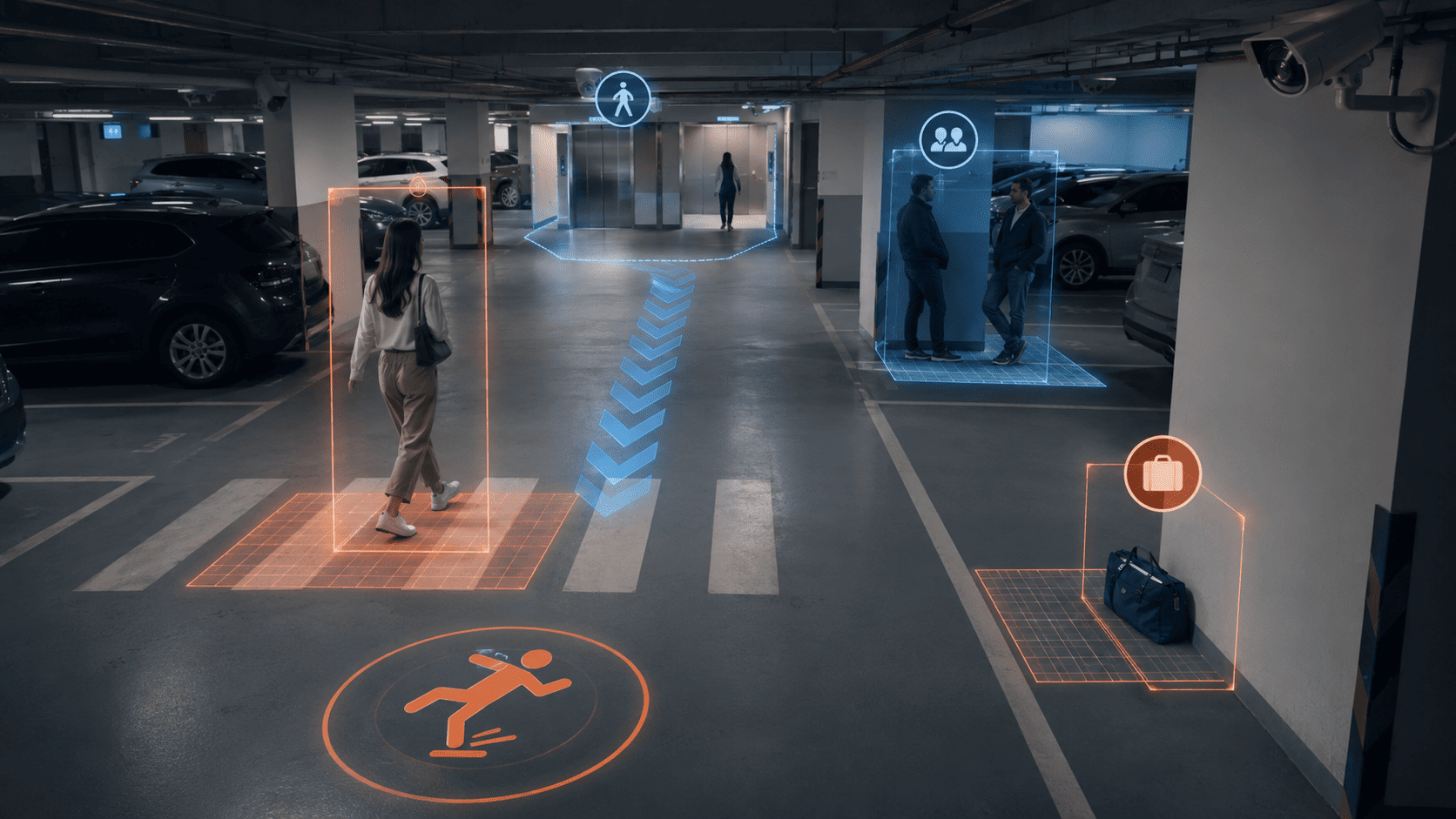 Safety
Accidents, falls, conflicts, suspicious objects, hazardous zones and evidence frames.
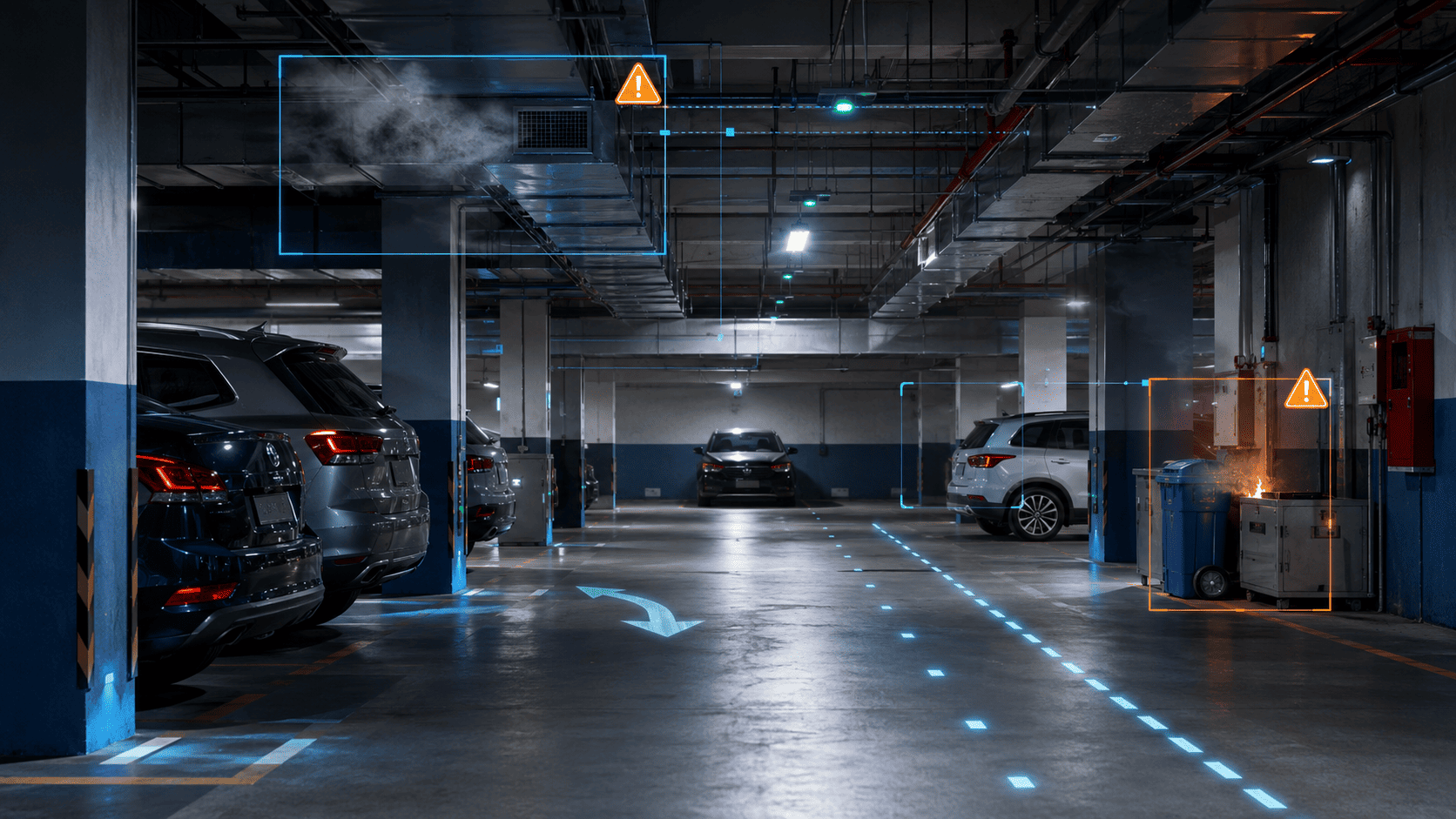 Fire / smoke
Early signs of smoke, open flame, haze, overheating and blocked exits.
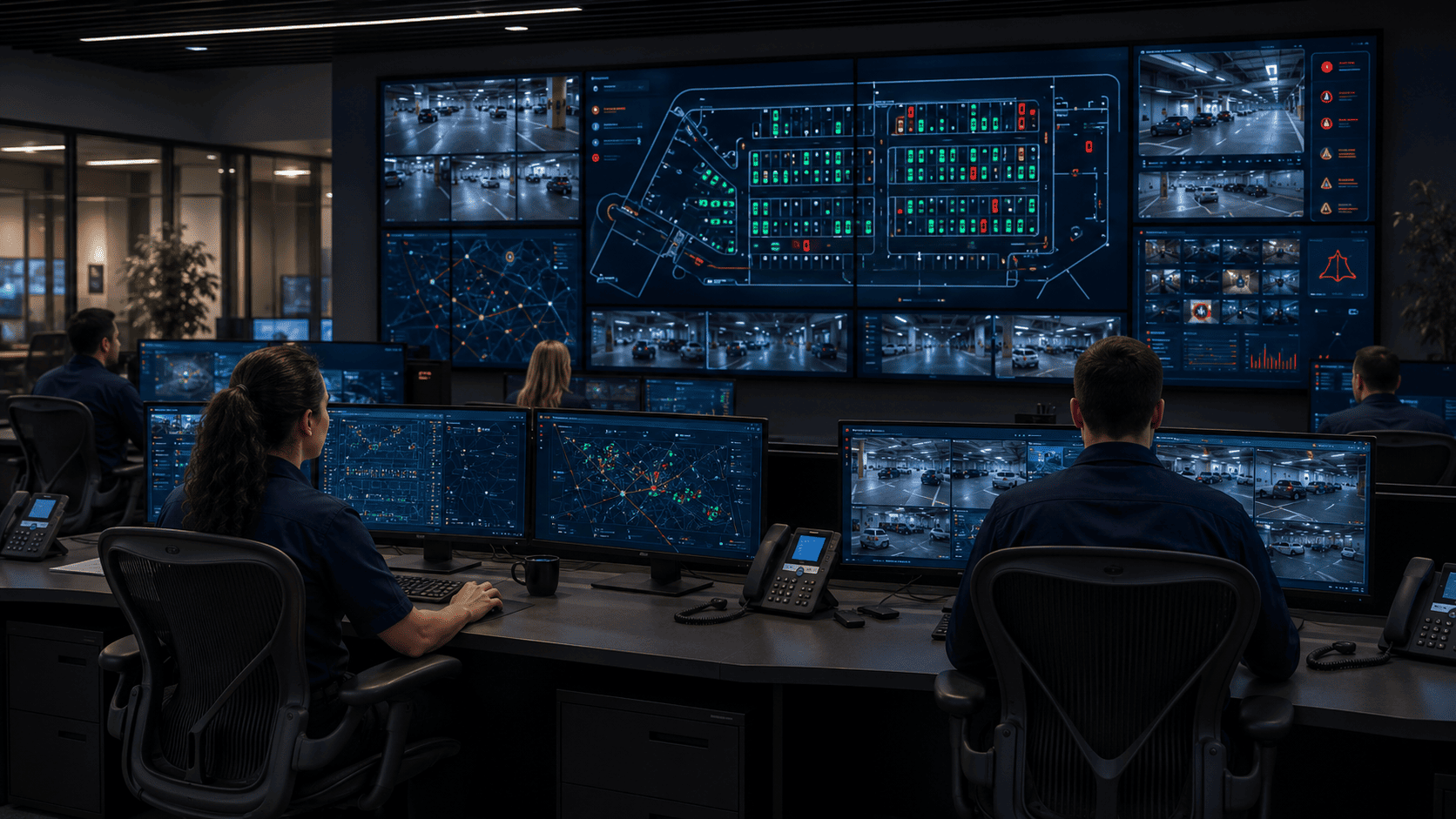 Center
Parking map, free spaces, entry/exit, events, archive, KPIs and network reports.
A scenario for parking sites, restricted areas and future residential utilities pages: the camera recognizes the vehicle, checks it against the authorized database and controls the barrier without manual verification.
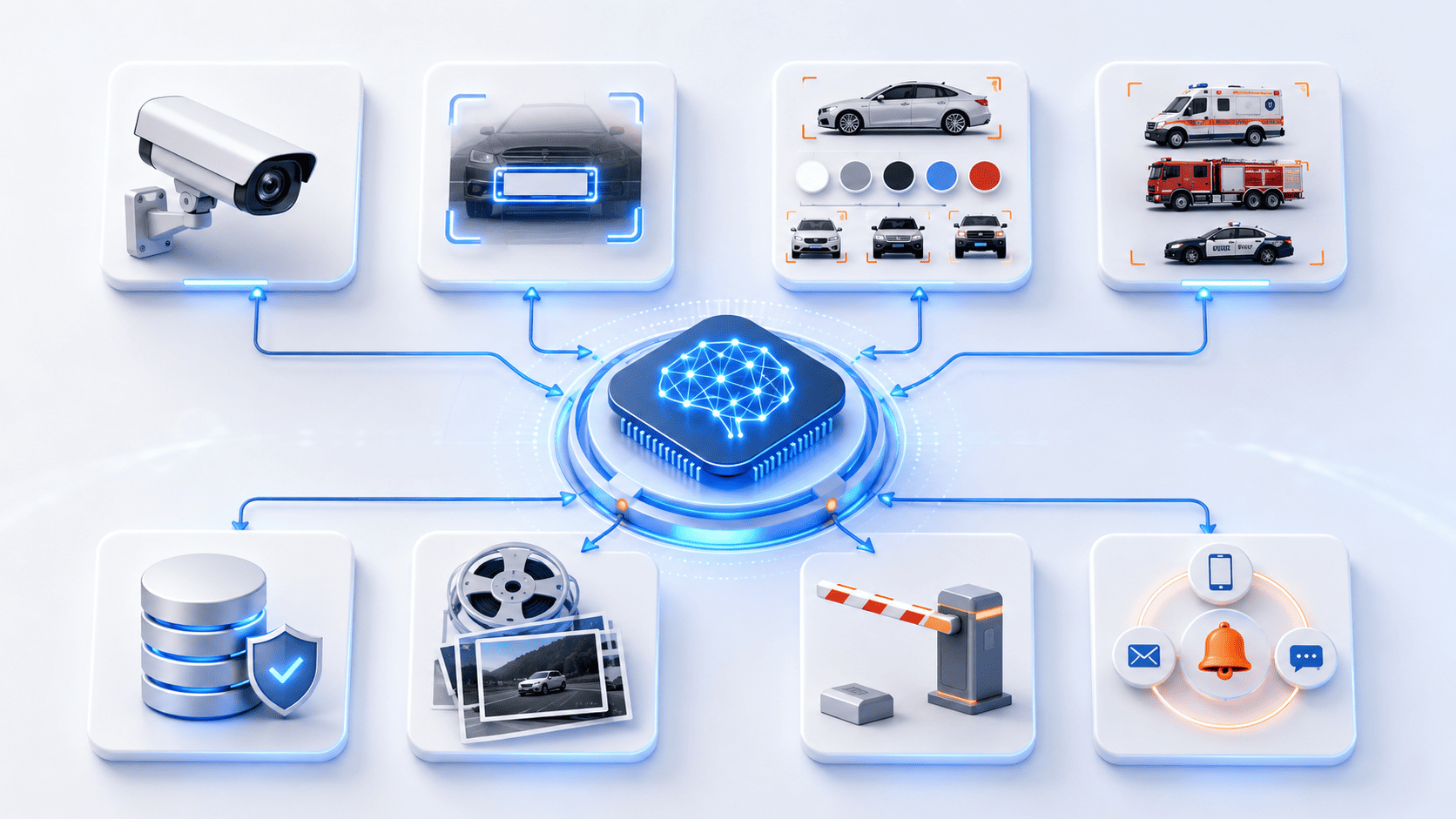
The system uses IP cameras to analyze vehicle video data and software to process access events.
It can work with standard video cameras, server processing, edge infrastructure or cloud computing.
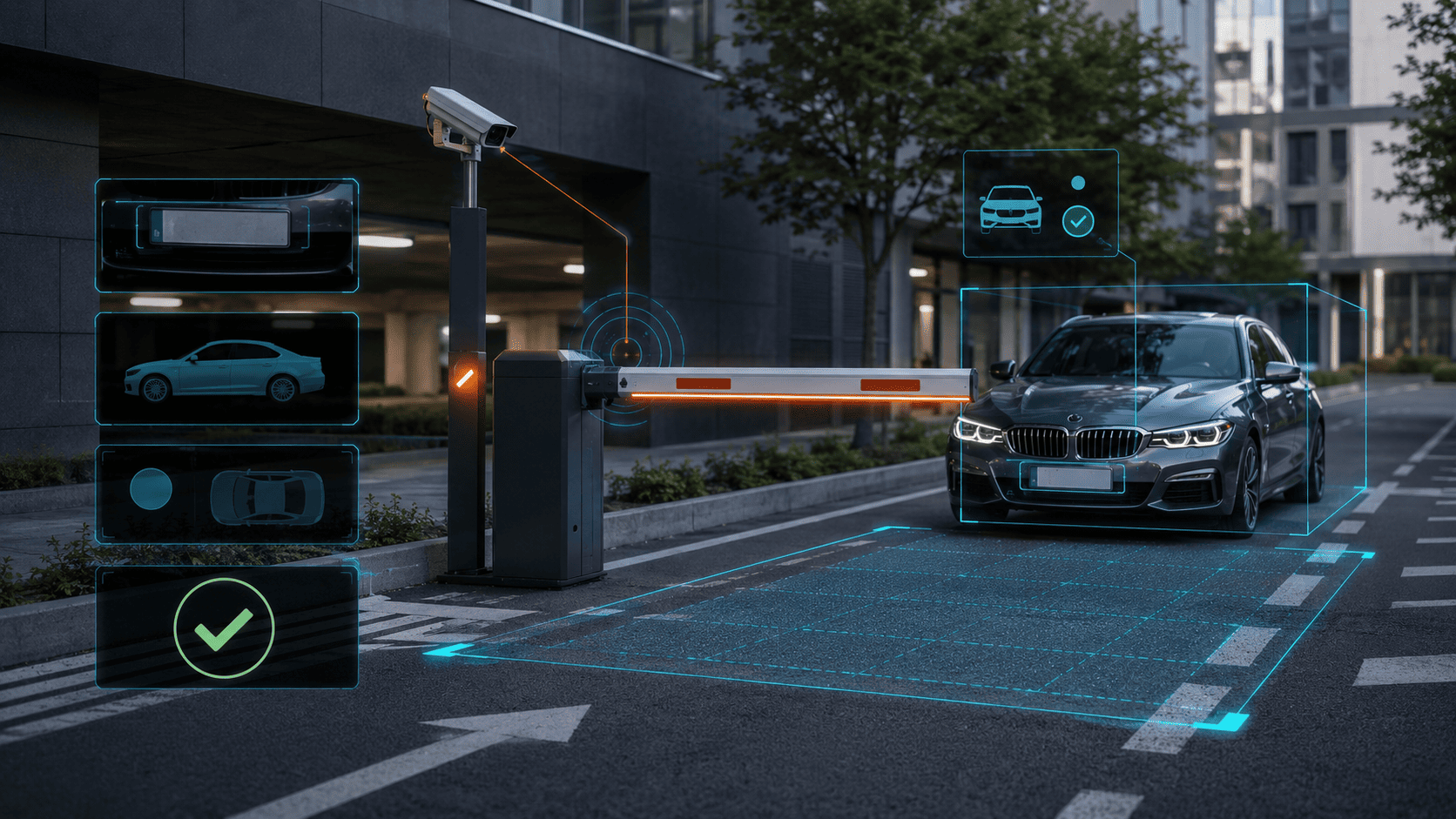
The barrier opens for authorized vehicles without calling a dispatcher or manual checks.
Ambulance, fire and other service vehicles can be recognized by visual attributes and access rules.
Authorized vehicle lists, tenants and temporary passes are updated centrally.
The system records unknown vehicles, night entries, repeated passages and disputed cases.
Recognition works with dirty plates, rain, snow, glare and low lighting.
The operator handles only disputed events, while routine passages are processed automatically.
Photos, video, vehicle attributes and system decisions are available for review and investigation.
Access can be connected with paid spaces, tenants, subscriptions and temporary passes.
The platform analyzes video streams, links events to parking zones and sends statuses to the interface, notifications, reports or external systems.
Video analytics detects free and occupied spaces, zone load, parking duration and areas where drivers spend time searching.
The data can be shown to operators, used for digital signage, mobile services or occupancy reports.
At entry and exit points it is important to understand not only vehicle count, but also delay causes: queue, payment issue, closed barrier, blocked lane or risky maneuver.
Events help operators react faster and managers see peak hours, bottlenecks and service dynamics.
Parking capacity quickly drops when vehicles occupy lanes, accessible spaces, fire zones or park outside markings.
The system highlights these events and helps send staff exactly where a violation affects traffic or safety.
Indoor and multi-level parking areas include pedestrians, vehicles, blind zones, elevator halls and technical rooms. Events around people, vehicles and hazardous objects matter.
The platform helps notice incidents faster, verify the frame and send a notification to security or operations.
Parking areas need early visual signs: ceiling smoke, local flame, smoke near a vehicle, overheating, blocked exit or blocked fire lane.
Video analytics complements fire automation with visual confirmation and helps operators open the right camera quickly.
When multiple parking sites are involved, comparable statuses matter: occupancy, free spaces, queues, violations, incidents, response time and repeated problem zones.
The dashboard combines map, cameras, events, archive, notifications and reports for operators, security and facility teams.
Metrics depend on layout, cameras, parking rules and integrations. In the pilot we capture baseline values, launch 3–5 scenarios and compare results using the same metrics.
Each team sees the events it needs: free spaces, entry/exit, violations, safety, operations, reports and KPIs.
No need to replace video surveillance. Scenarios run on top of existing cameras and can gradually connect to access, payment, BI, VMS and notification channels.
RTSP/ONVIF, NVR/VMS, edge or server processing, work with already installed cameras.
Integration with barriers, payment systems, passes and optional license plate recognition.
Events for operators, security, operations and dispatch via interface, email, Telegram or webhook.
Export of aggregated metrics on spaces, queues, violations, incidents and network sites.
We start with the camera plan, zones, entries, exits and parking rules. Then we launch 3–5 scenarios, capture baseline metrics and keep only what produces measurable value.