Human factor
Violations are noticed after the fact, and service quality depends on the attention of the manager and shift lead.

Cameras, AI scenarios, events, notifications, KPIs and integrations for managing service, kitchen operations, staff and guest experience in restaurants, cafes and chain venues.
Cameras are already installed, but are usually used only to review incidents. The manager does not see the full picture across the hall, kitchen, cash desk and staff, while service standards depend on the shift and individual employees.
Violations are noticed after the fact, and service quality depends on the attention of the manager and shift lead.
Guest walkouts, slow pickup, returns, write-offs and cash desk exceptions are not combined into one operational picture.
It is difficult to compare restaurants, shifts and teams by speed, standards and reasons for deviations.
By the time the video archive is reviewed, the issue has already affected the guest, the check or the reputation.
Losses occur every day because of inefficient processes, staff mistakes and lack of control in key zones. AI turns video surveillance from a passive archive into an operational management loop: events, reasons, KPIs, notifications and evidence base.
Long guest waiting time, empty or dirty tables, low turnover and missed upsell.
Delayed food pickup, order assembly mistakes, overholding, returns and product losses.
Idle time, phone use, uneven workload, violations of uniform and service standards.
Leaving without ordering, low repeat visits, negative experience and no managed customer journey.
Functionality can be enabled step by step: from one zone to a network of locations with a unified analytics center.
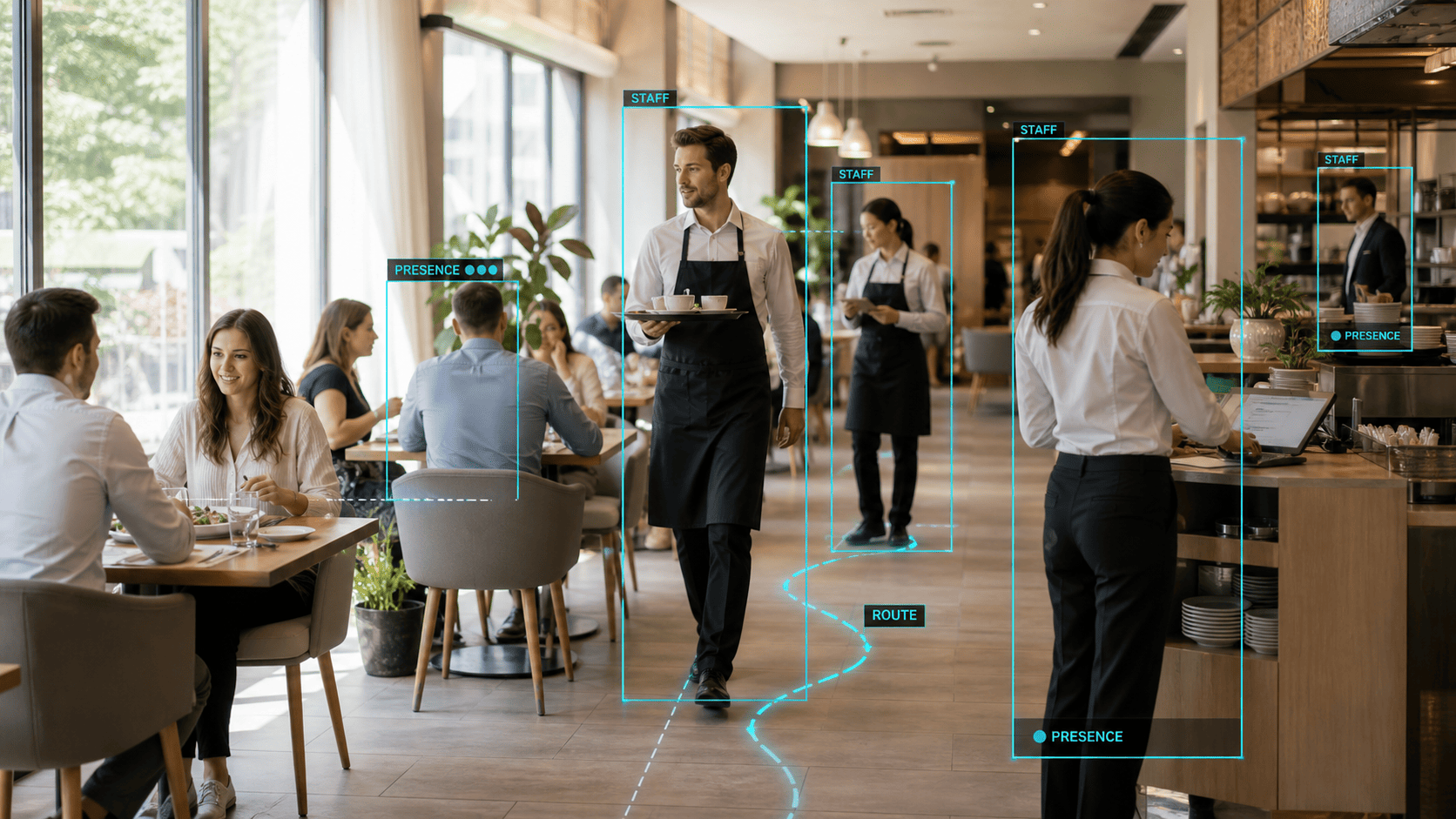
Presence, phone use, routes, appearance, idle time, service time and shift KPIs.
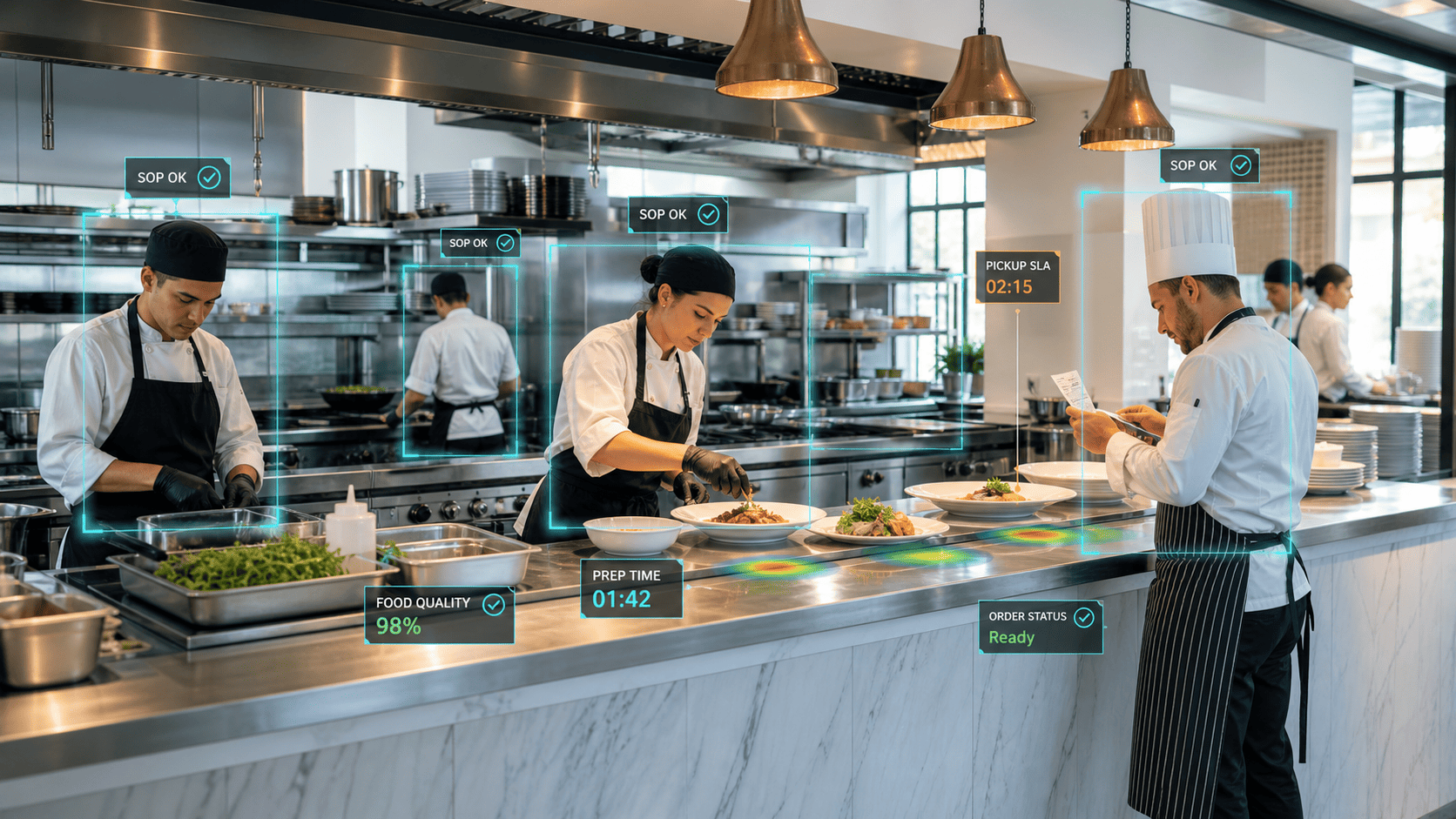
Pickup speed, order contents, sanitary rules, smoke, fire, cleanliness and procedures.
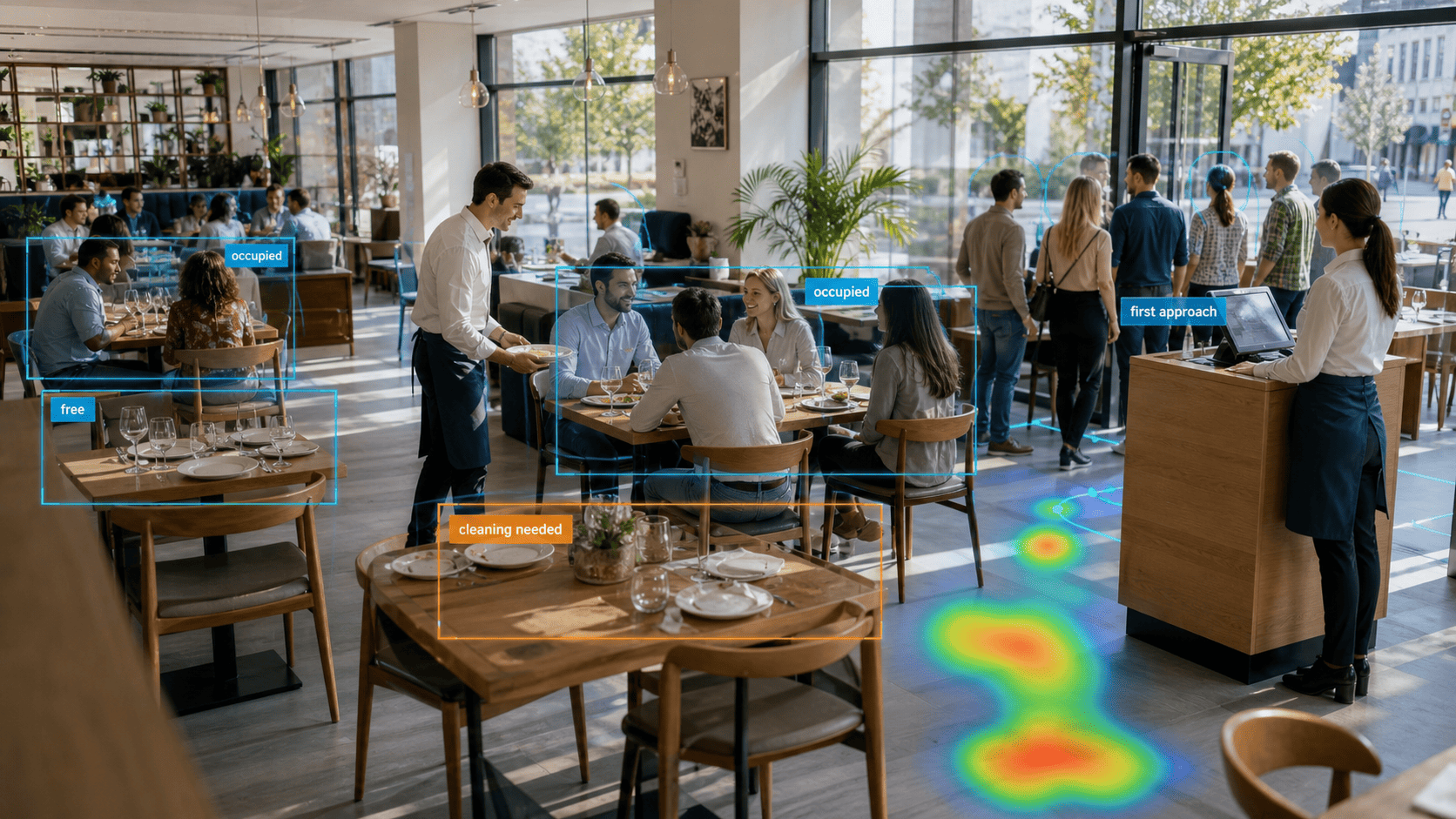
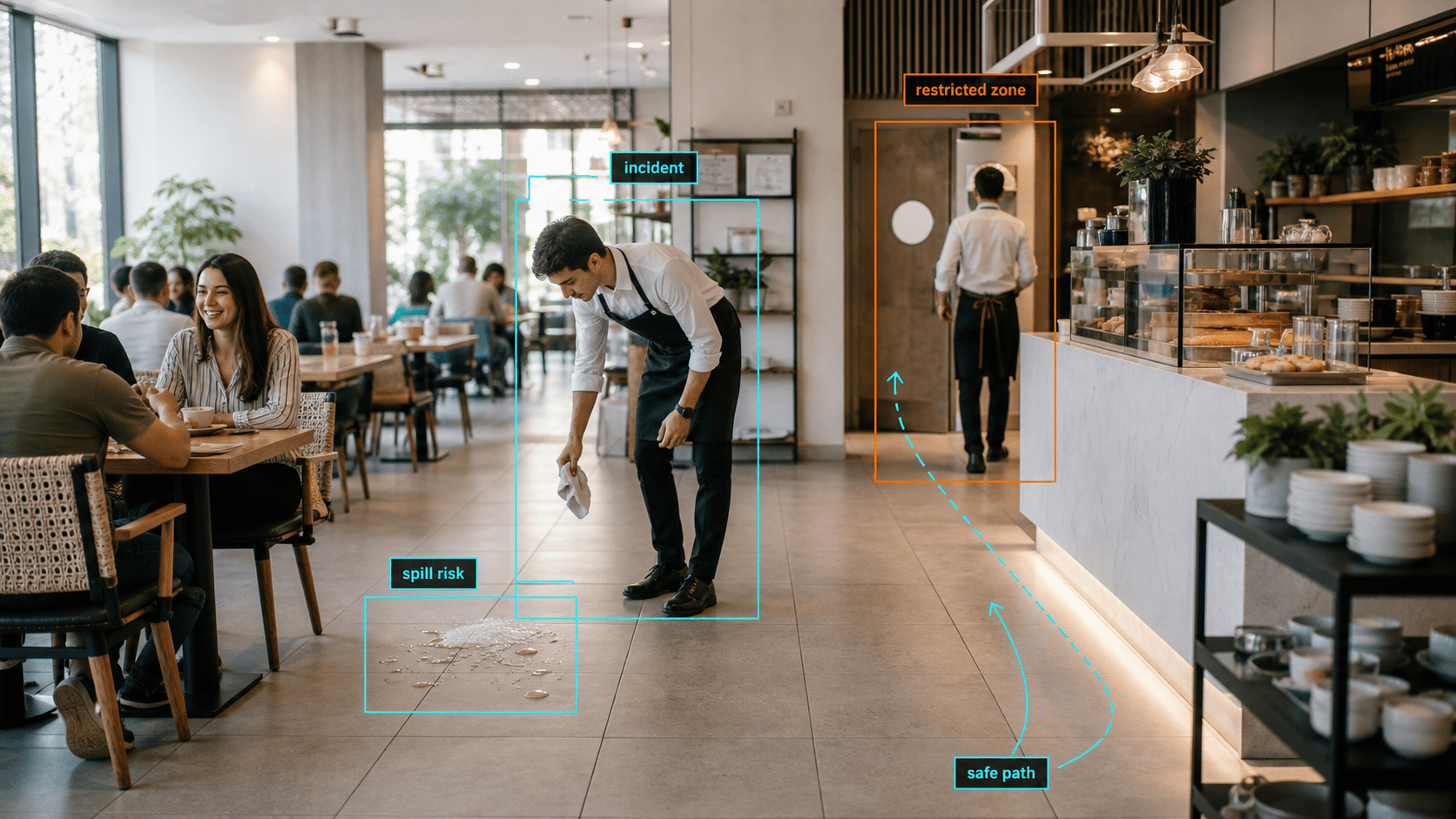
Hall load, free and dirty tables, first waiter approach, cleaning and queues.
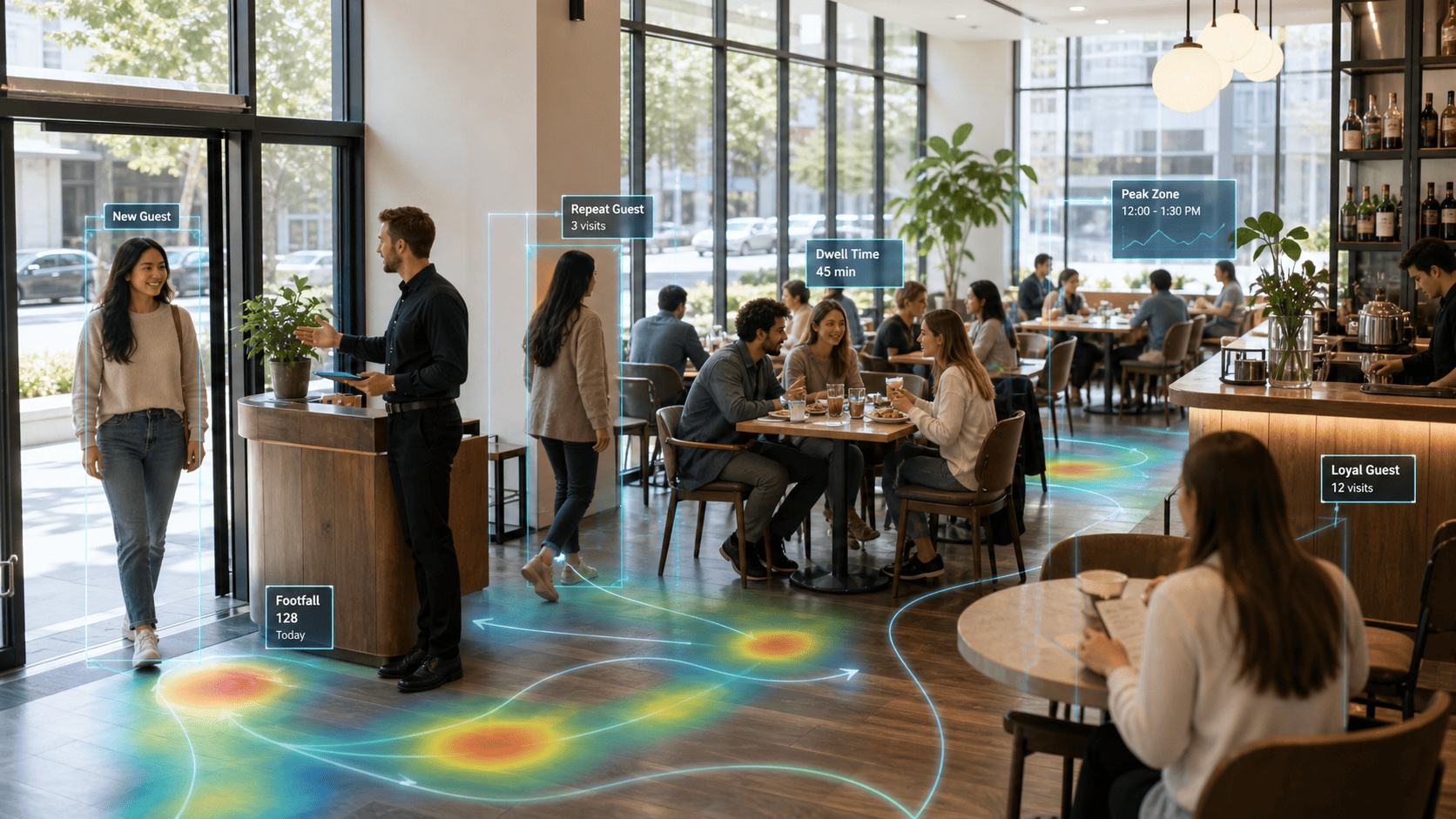
Visitors, repeat visits, average dwell time, peak hours and heatmaps.
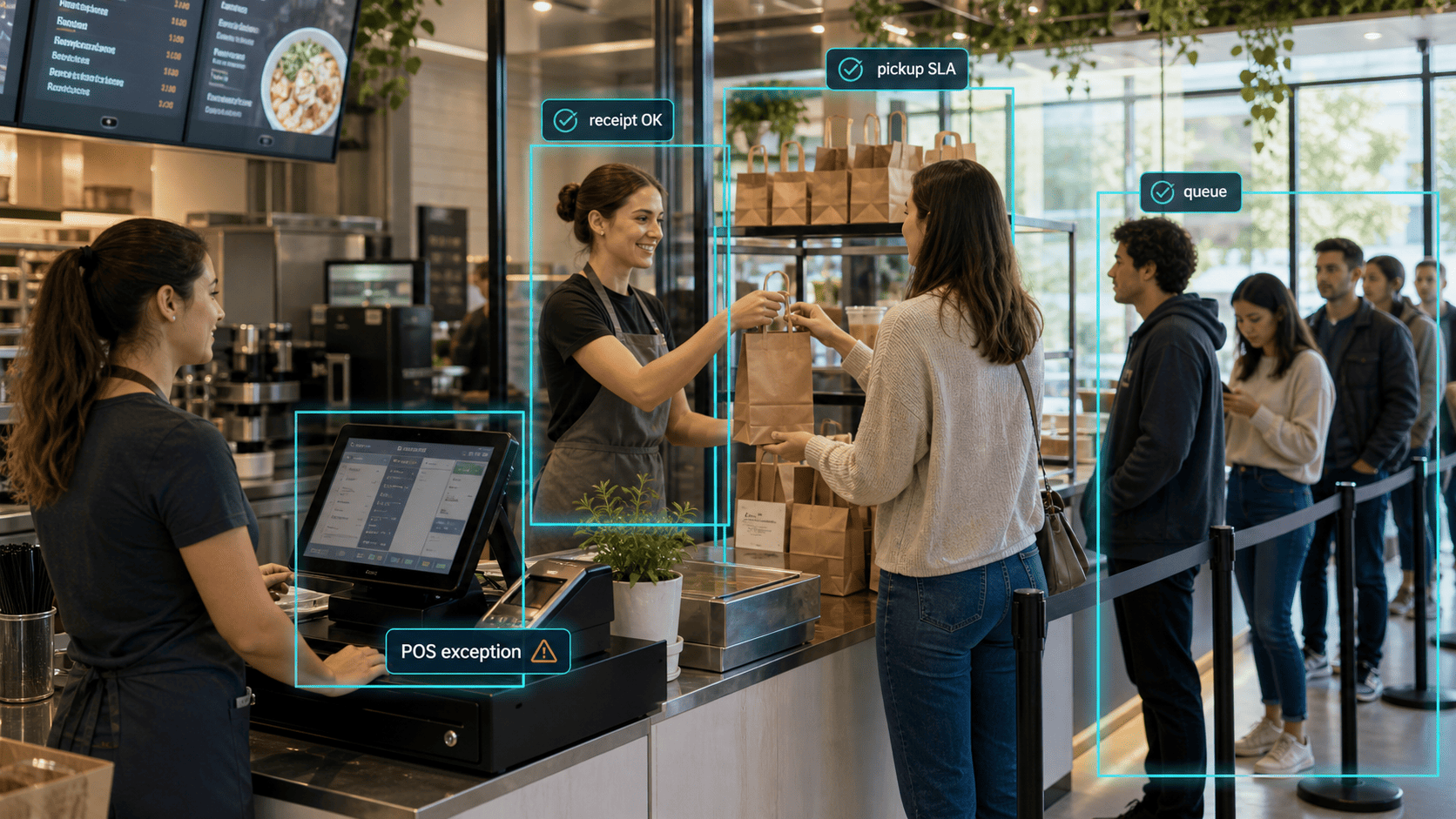
Queues, order assembly speed, cash drawer opening, receipt, suspicious actions and pickup.
Greeting, upsell, loyalty card, stop phrases, consultations and script compliance.
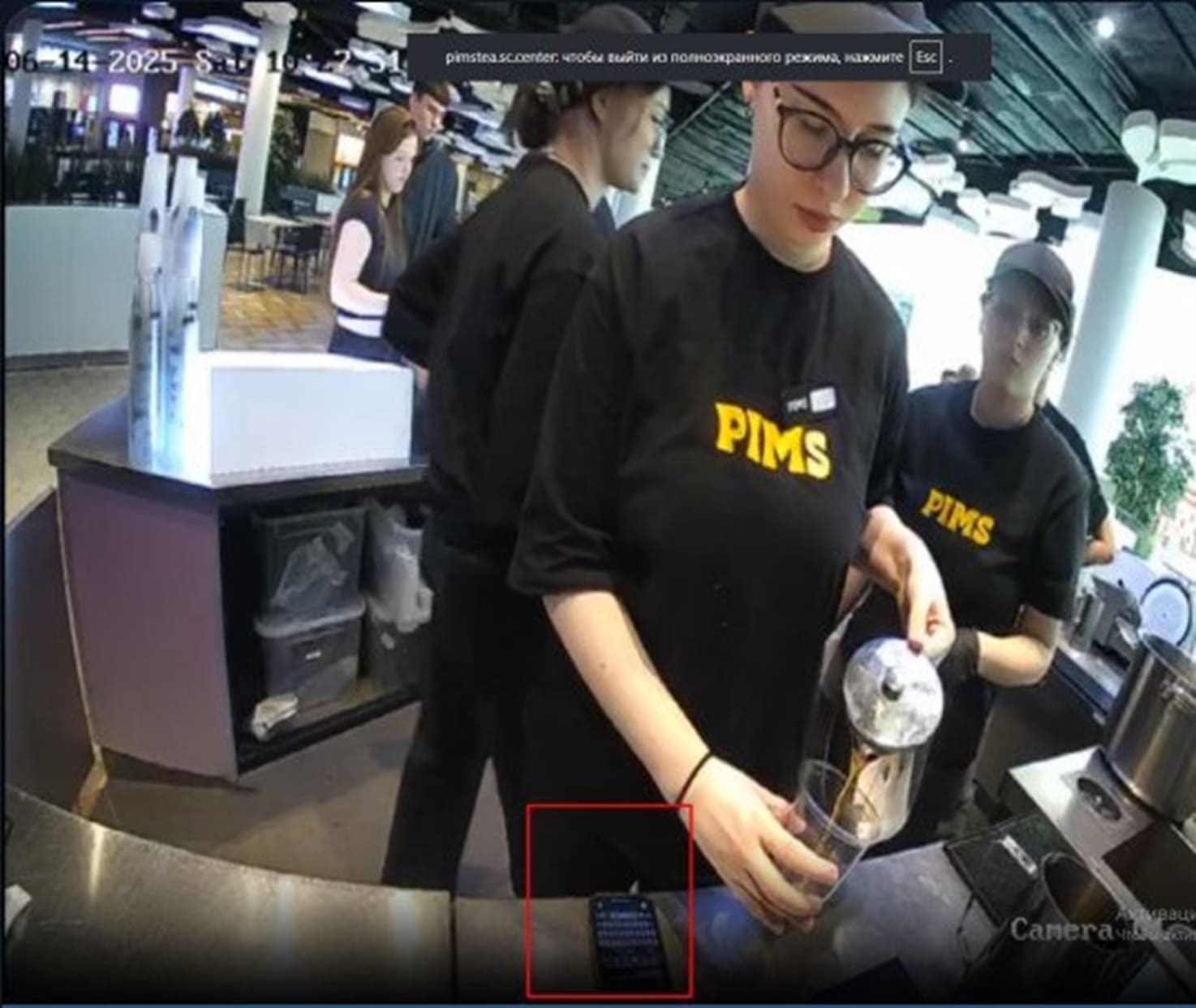
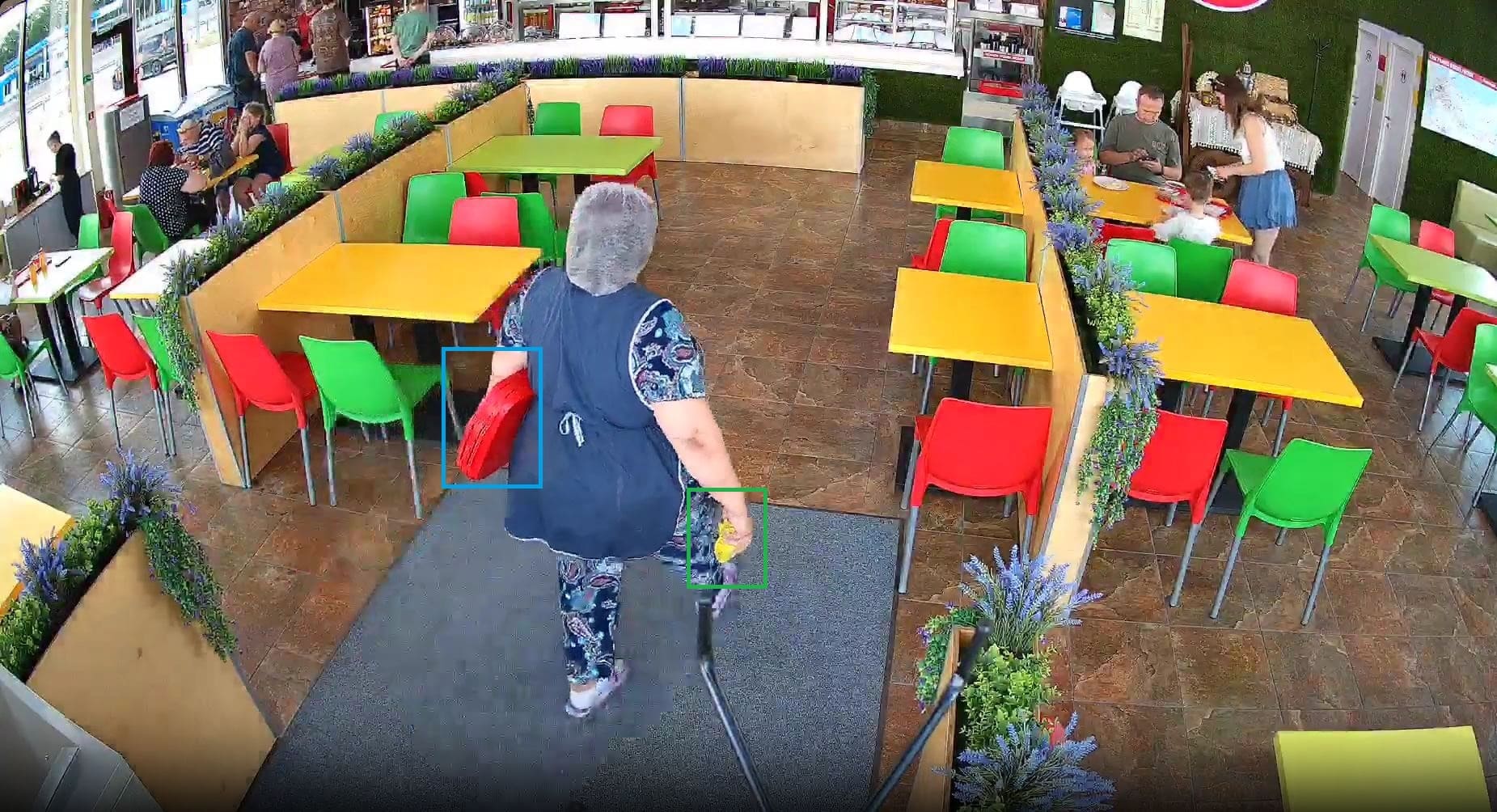
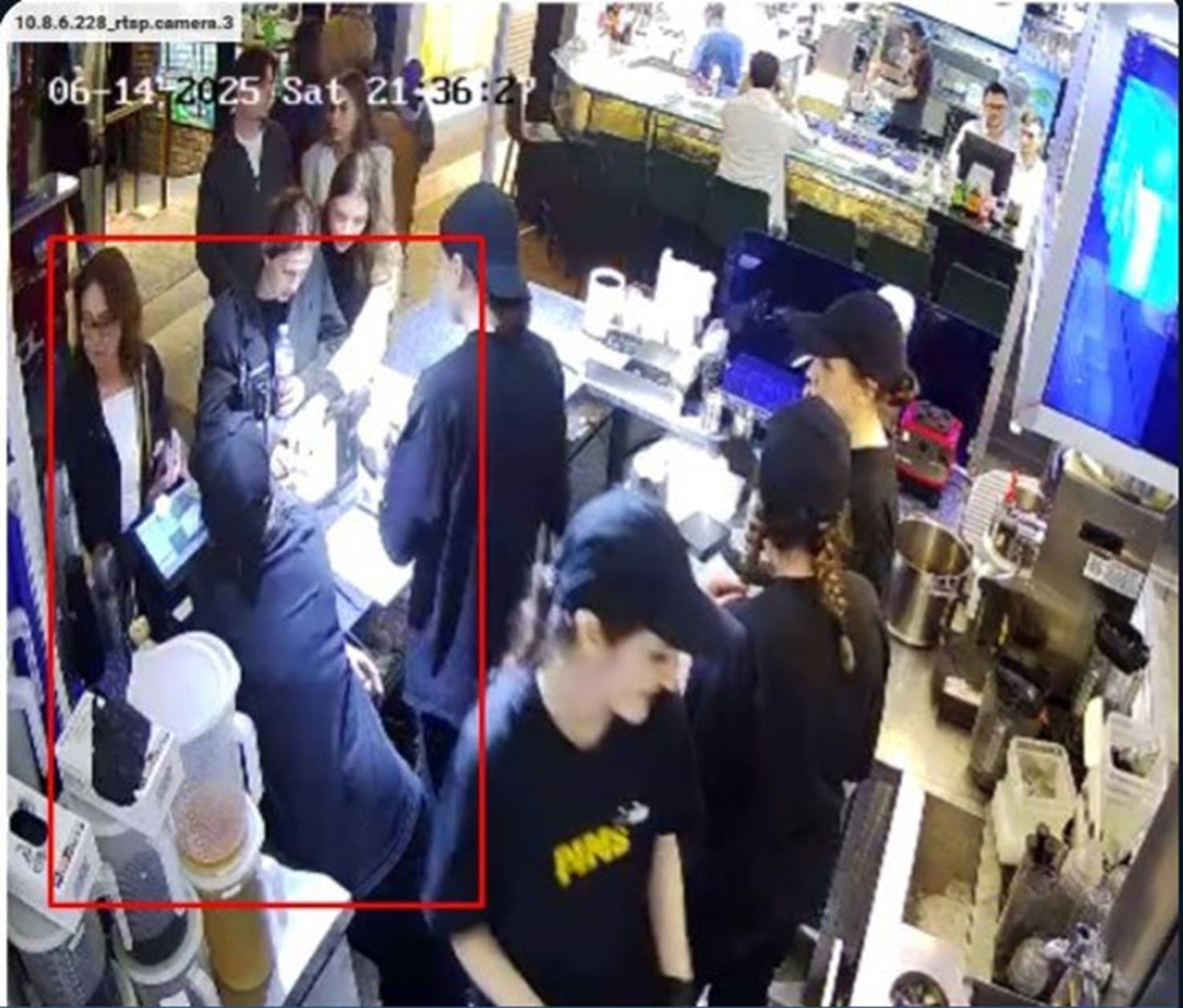
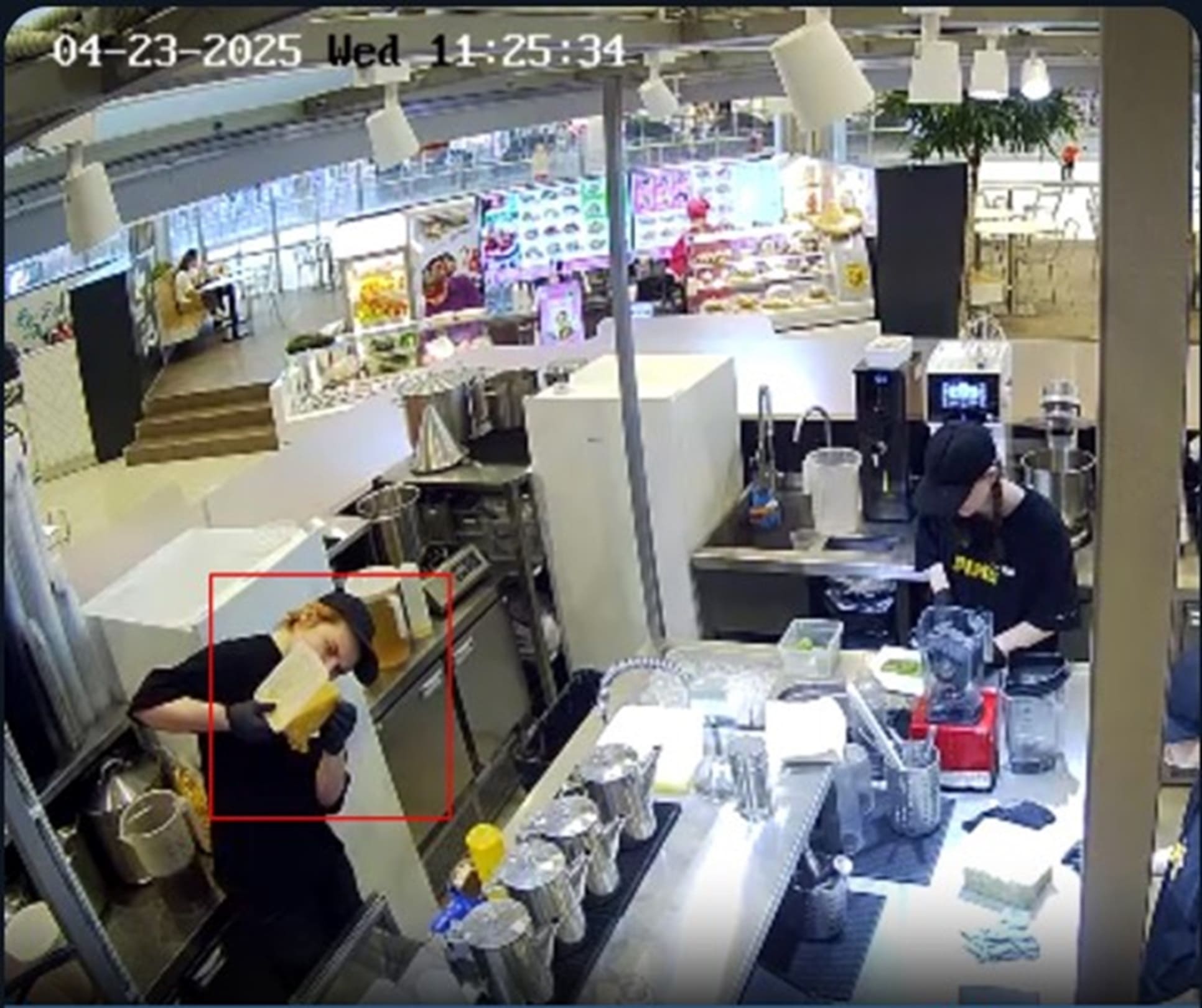
The system shows presence, routes, activity, service time, idle time, zone compliance and discipline. The manager sees not only a single violation, but also repeated problems by employees, shifts and restaurants.
The platform shows the guest journey from entry to exit: flow, waiting, seating, first contact, order, pickup, repeat visit and leaving without service.
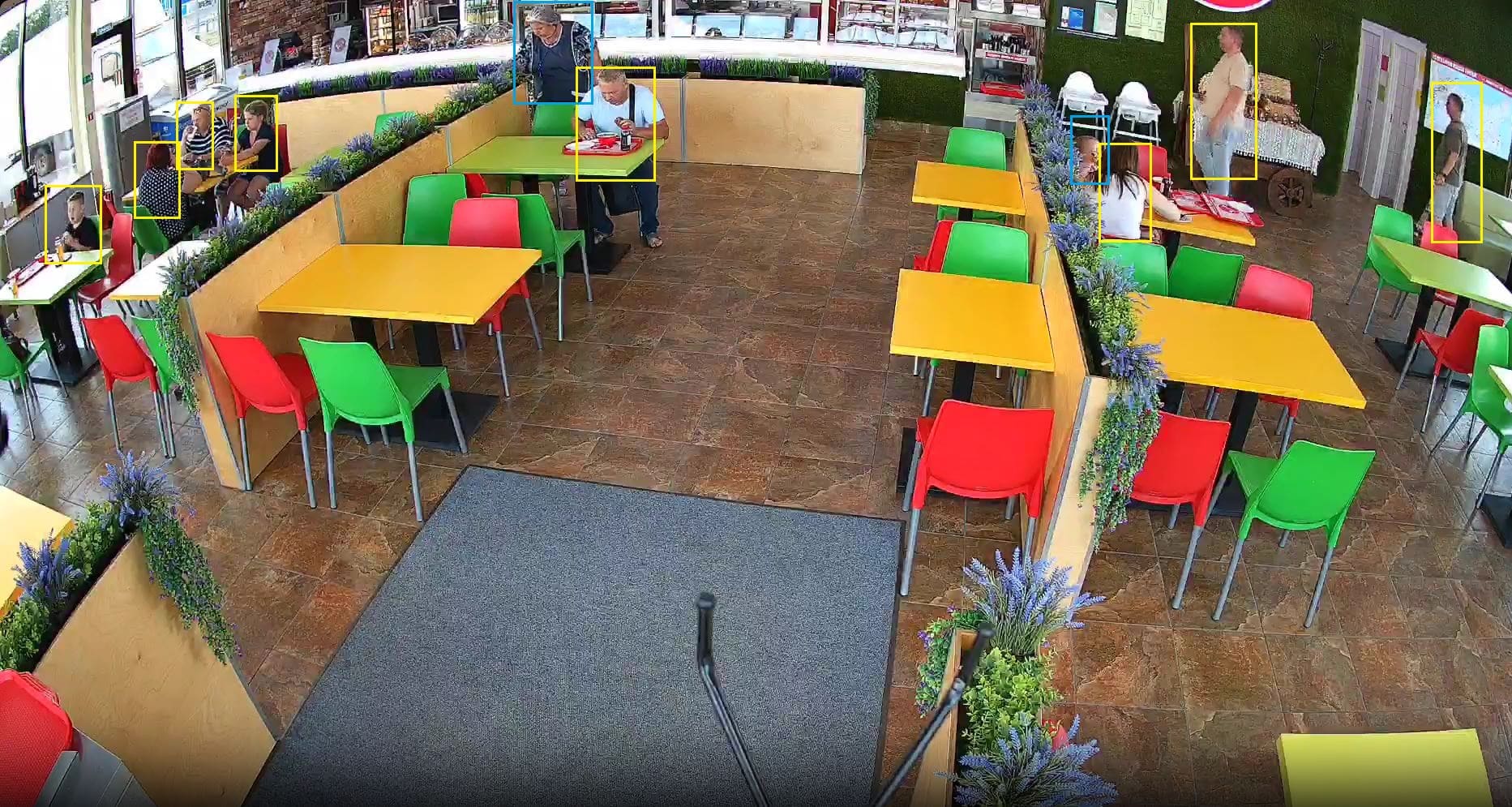
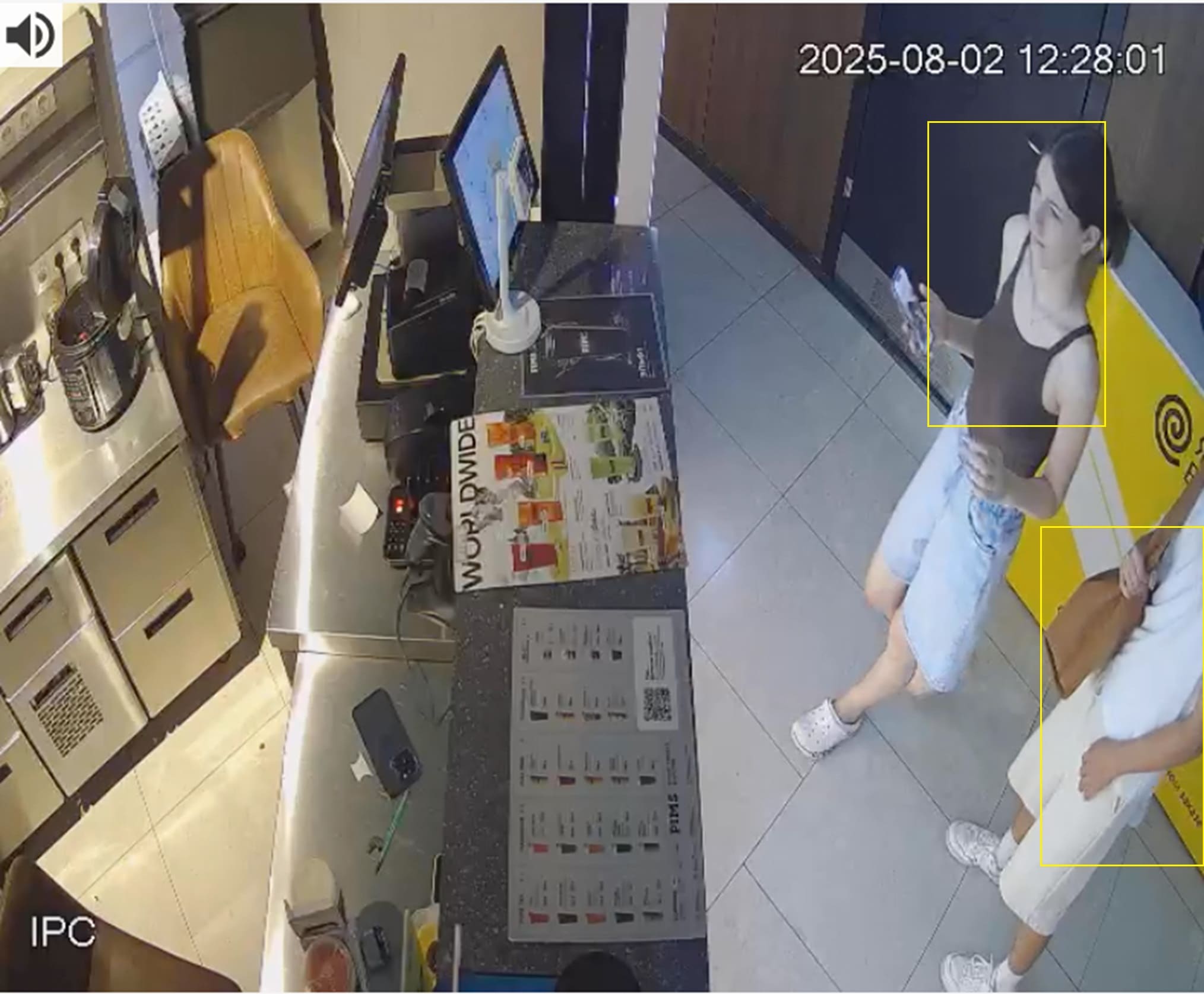
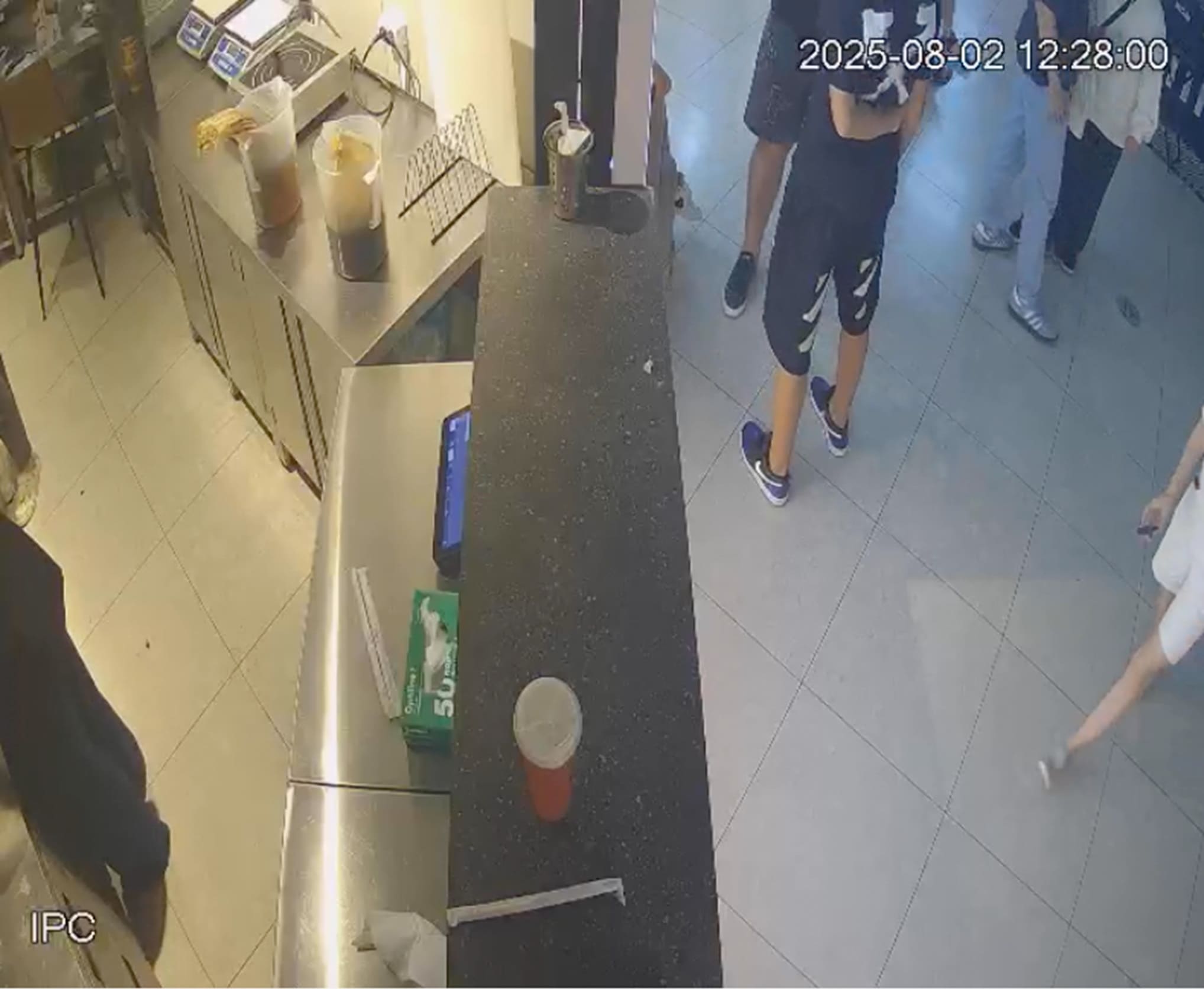
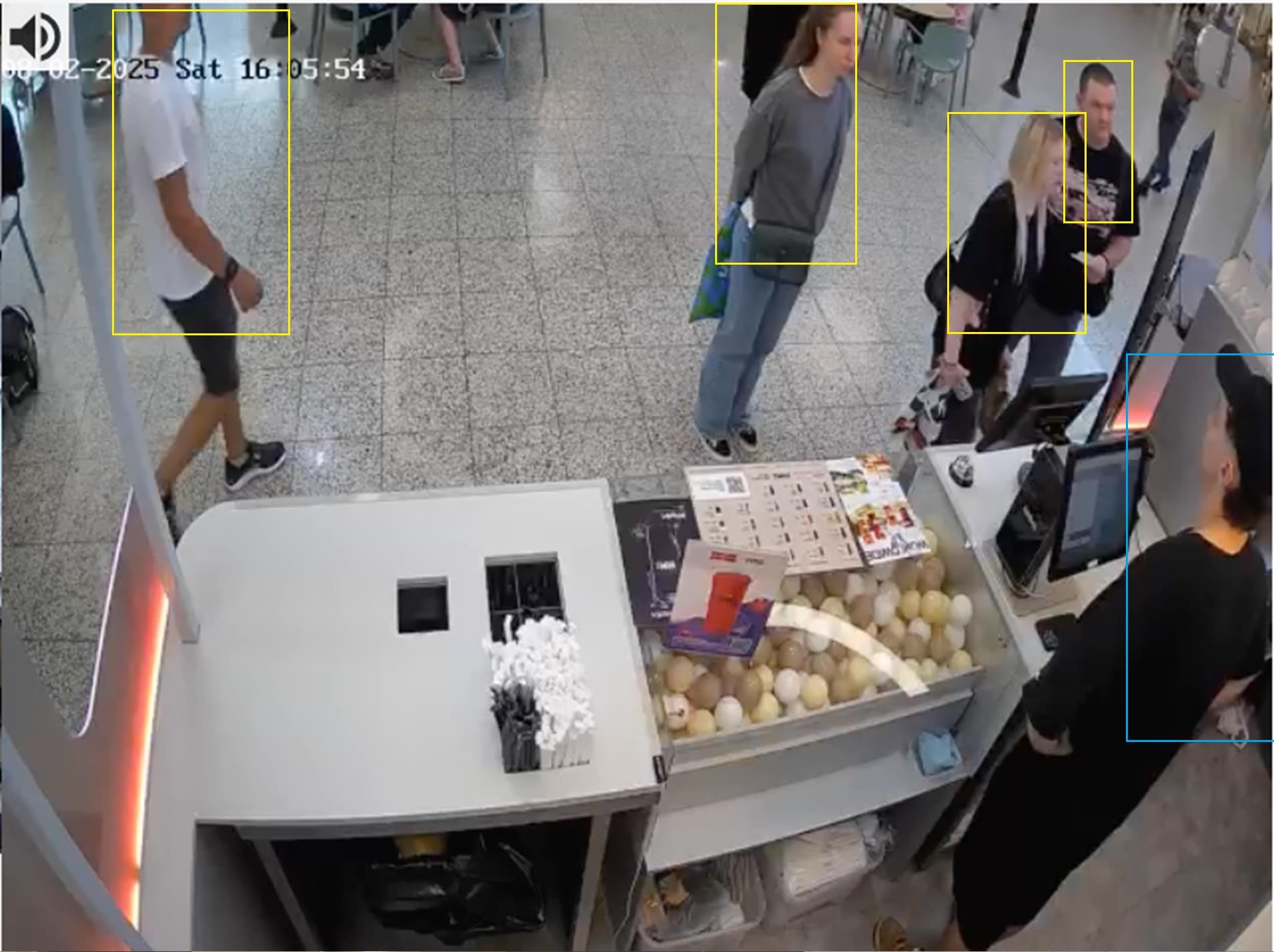
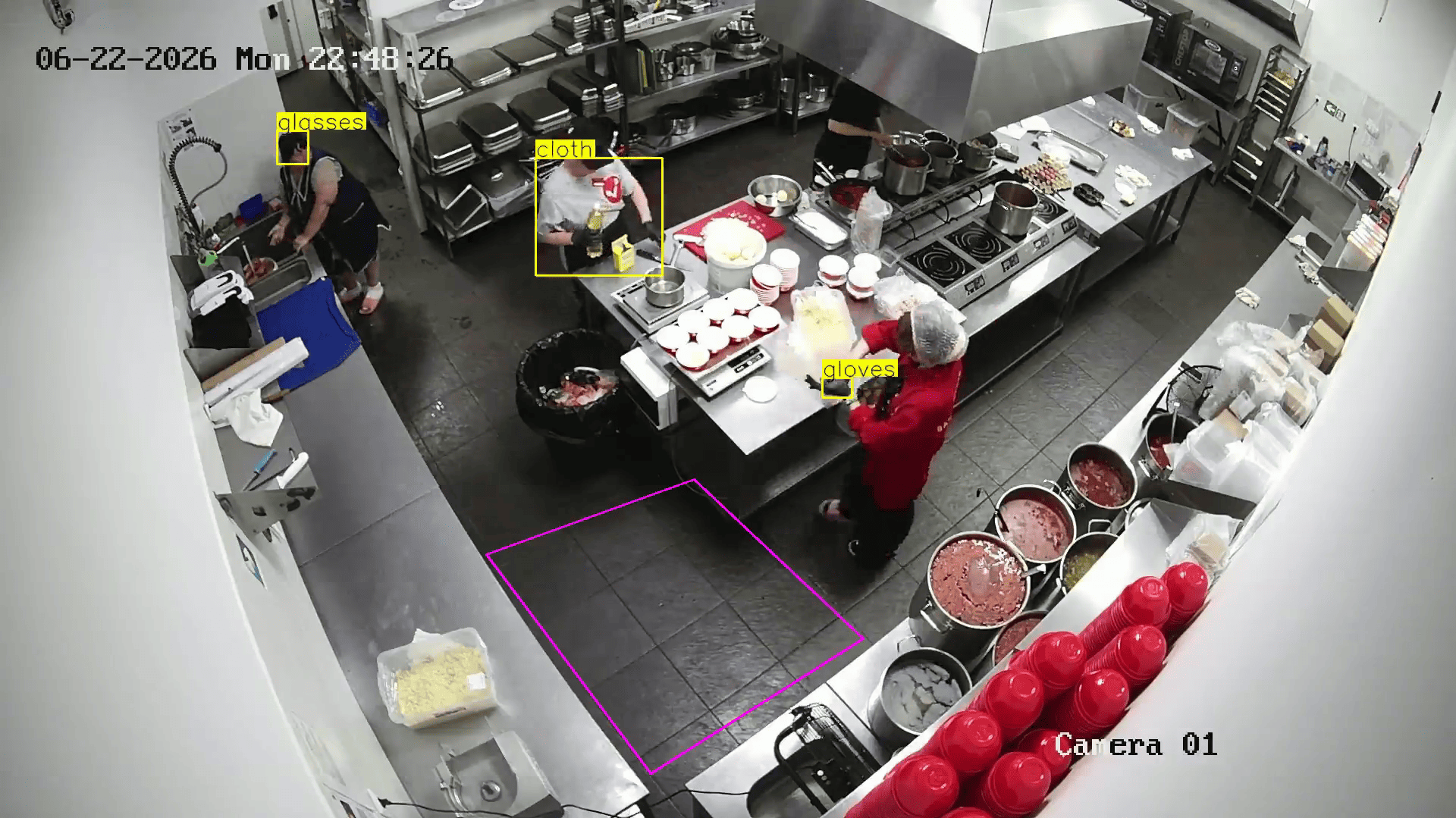
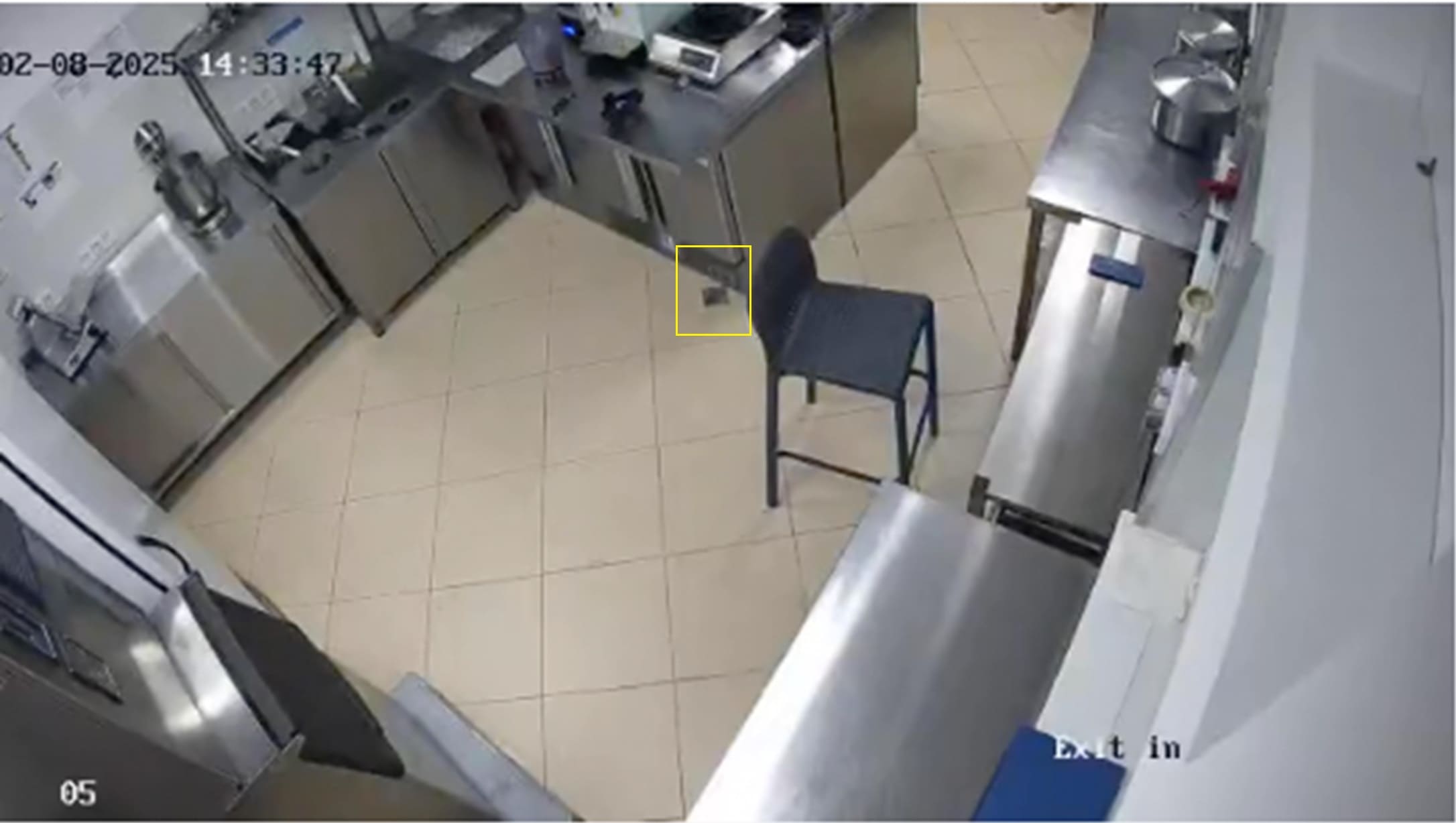
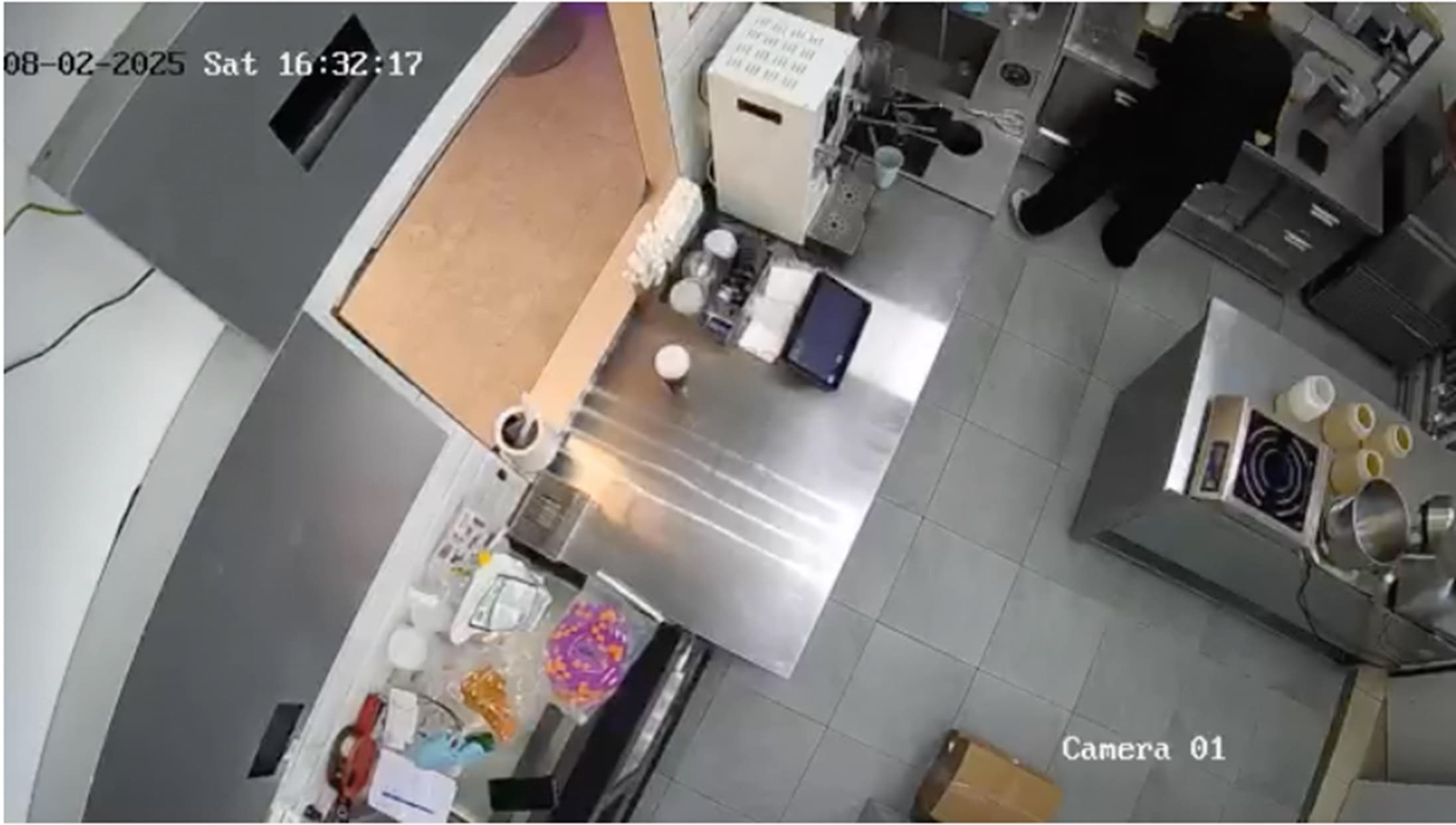
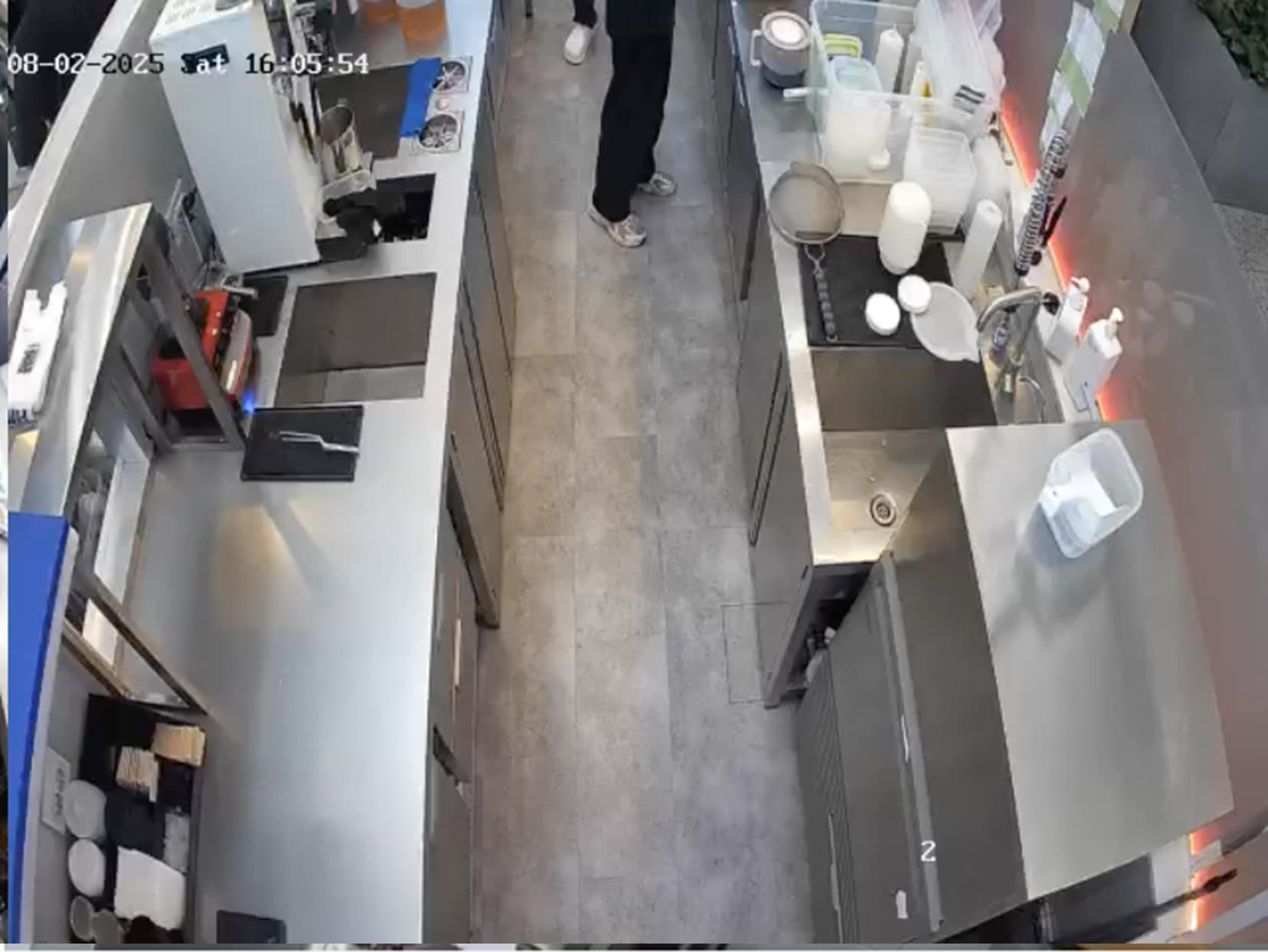
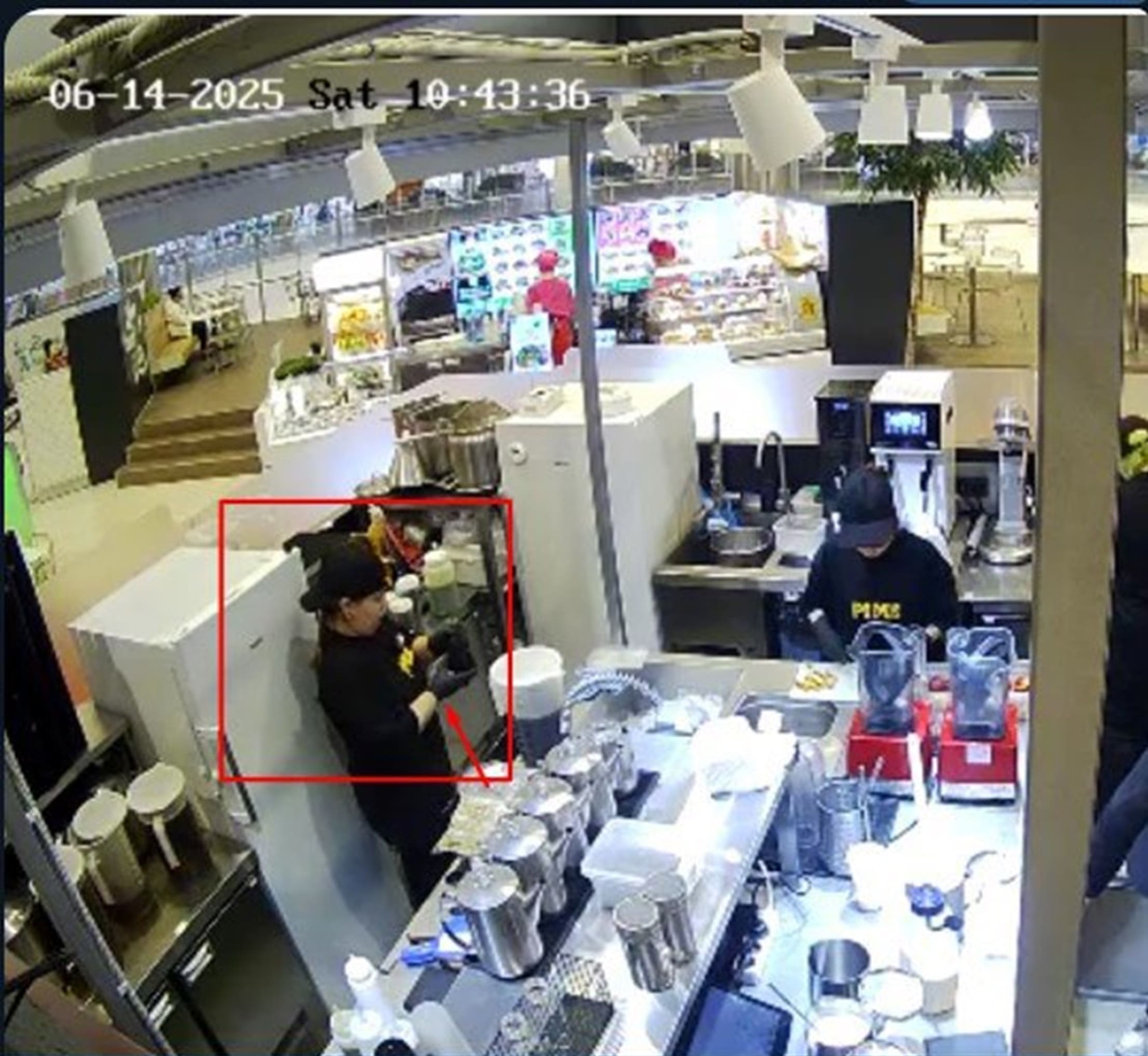
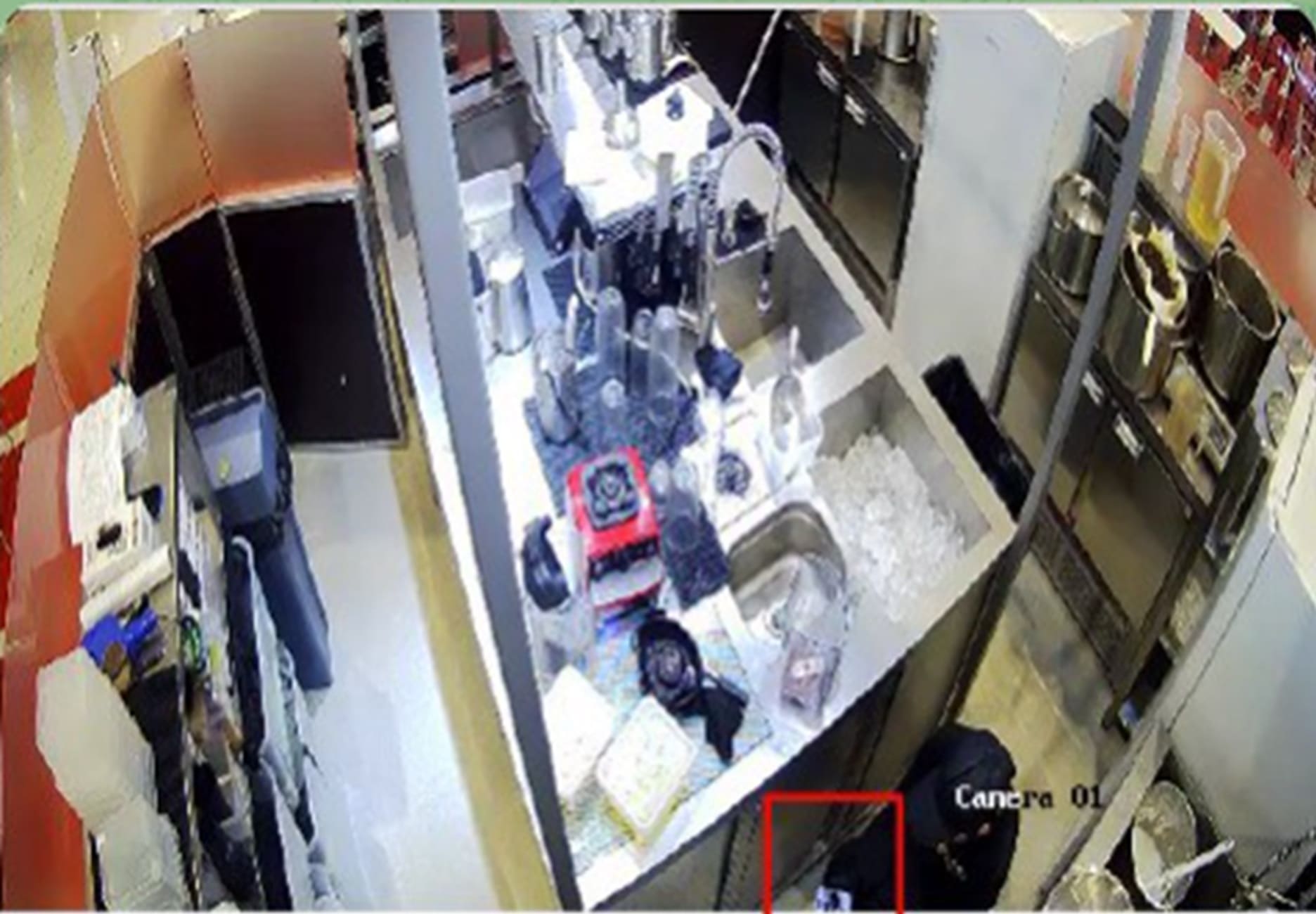
AI helps control sanitary and operating standards without manual camera review: PPE, hygiene, workplace cleanliness, foreign objects, labeling, smoke and fire.
The cash desk module links POS-zone events to video: cash drawer opening, receipt handling, returns, discounts, actions without purchase and procedure deviations.
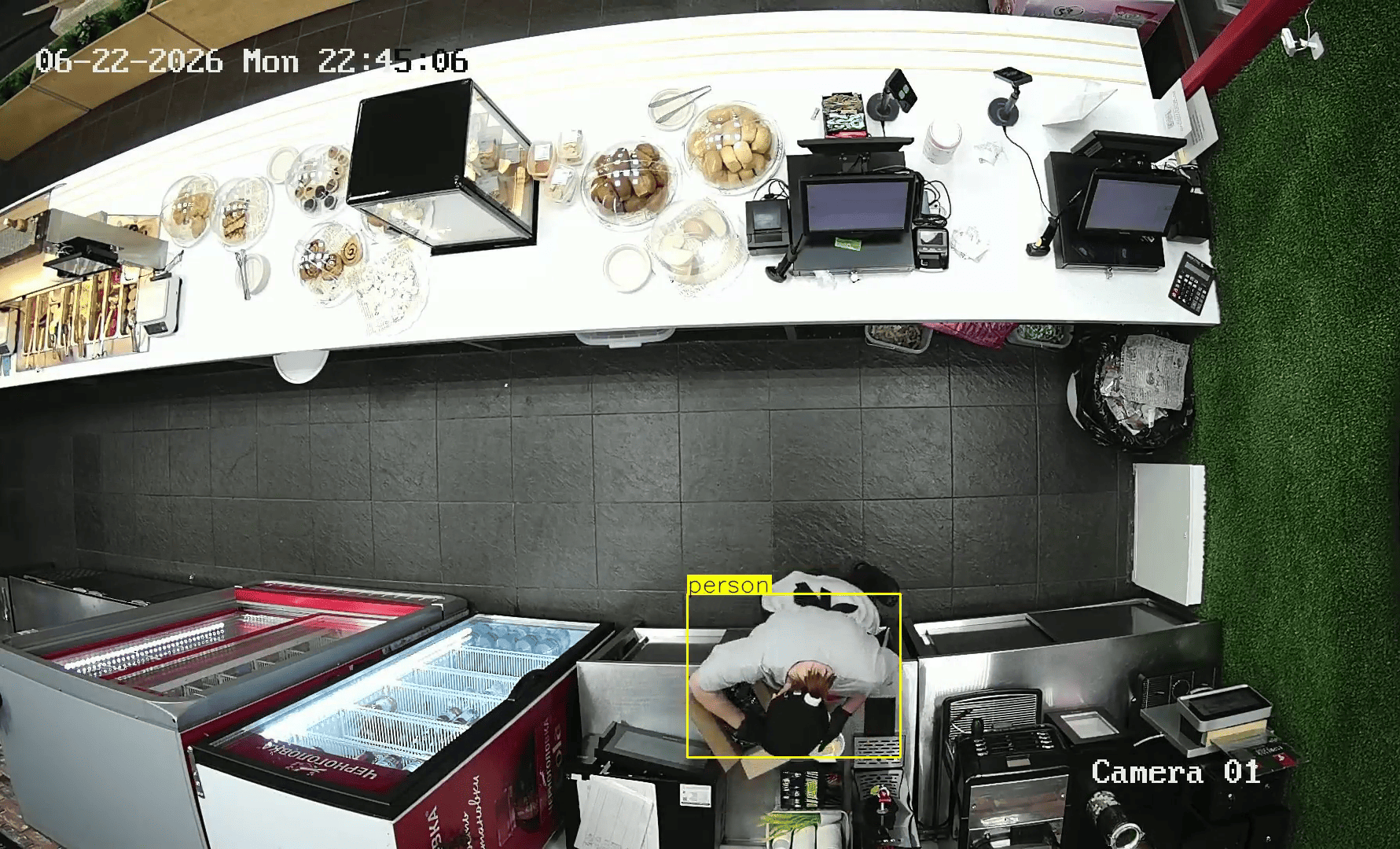
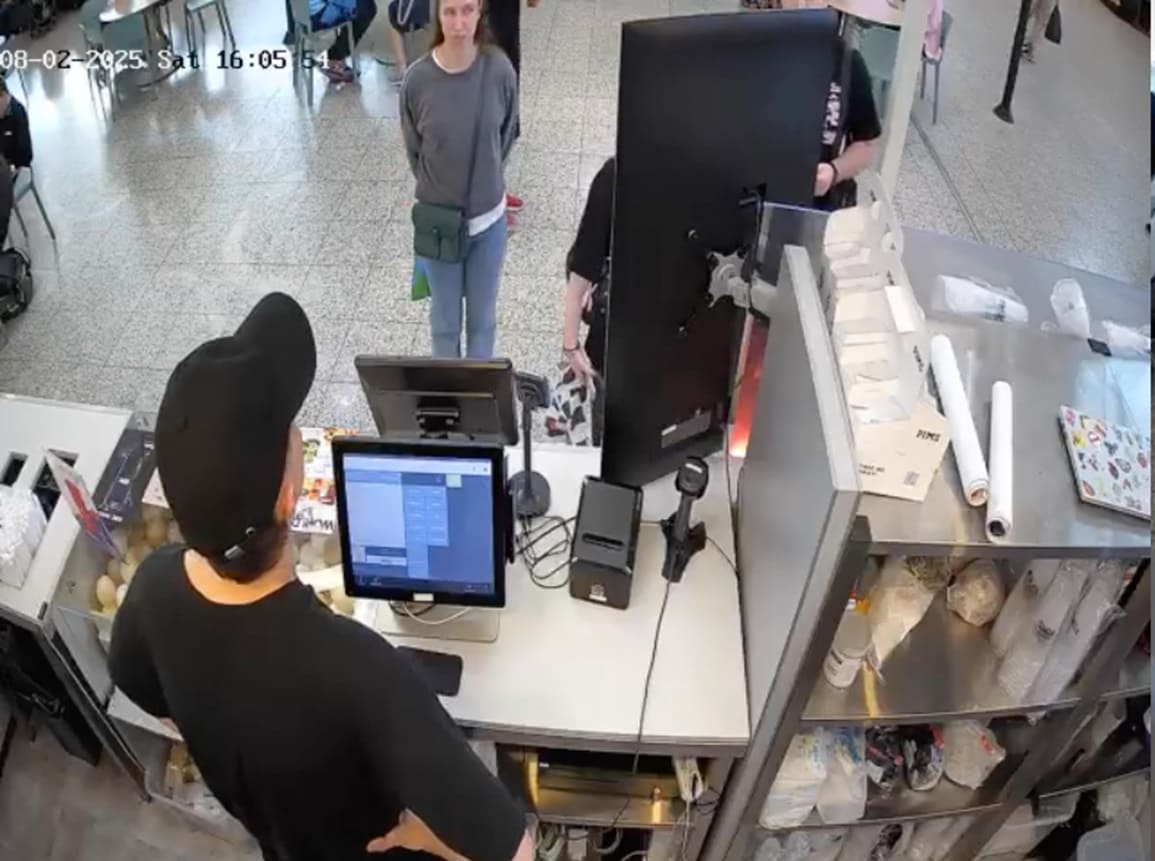
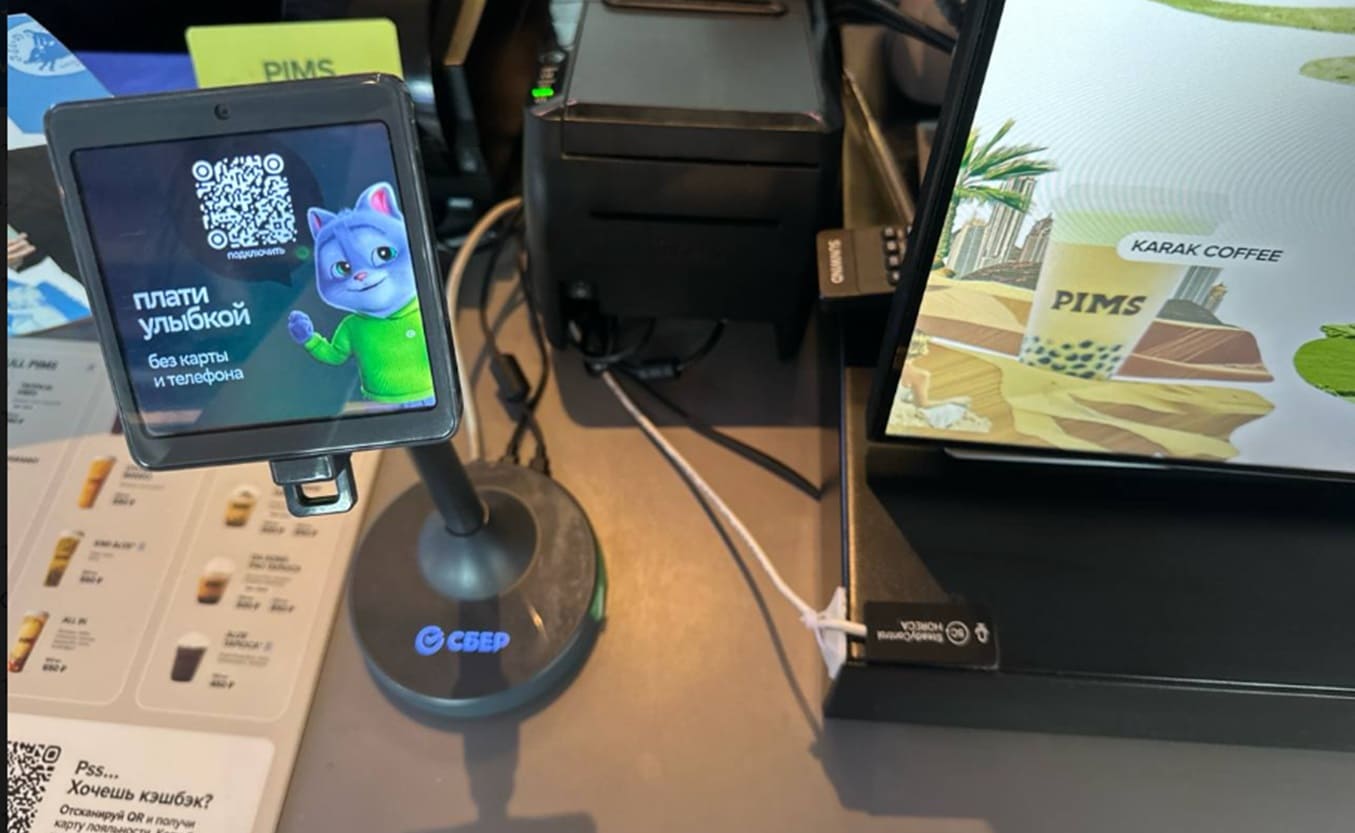
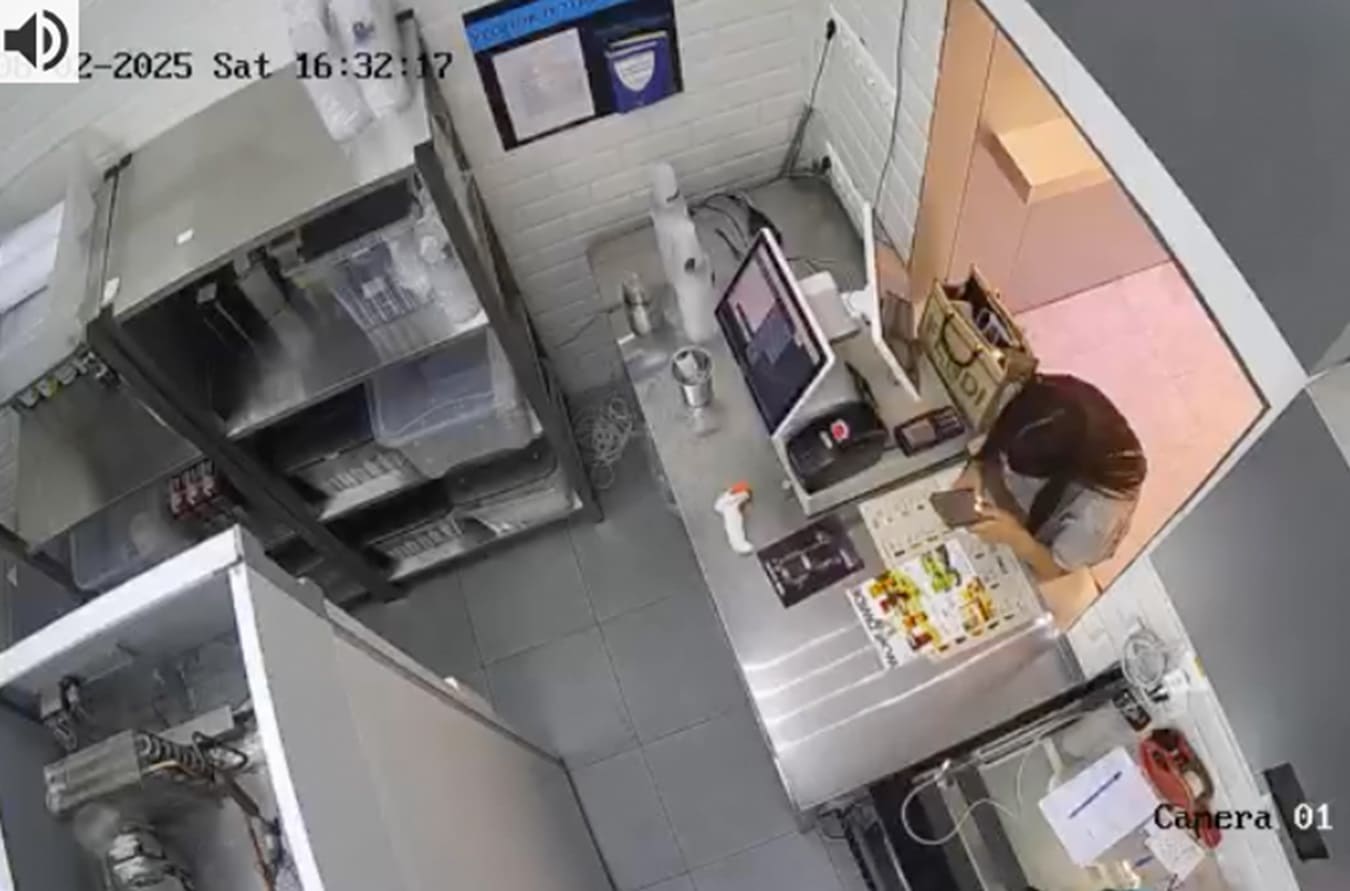
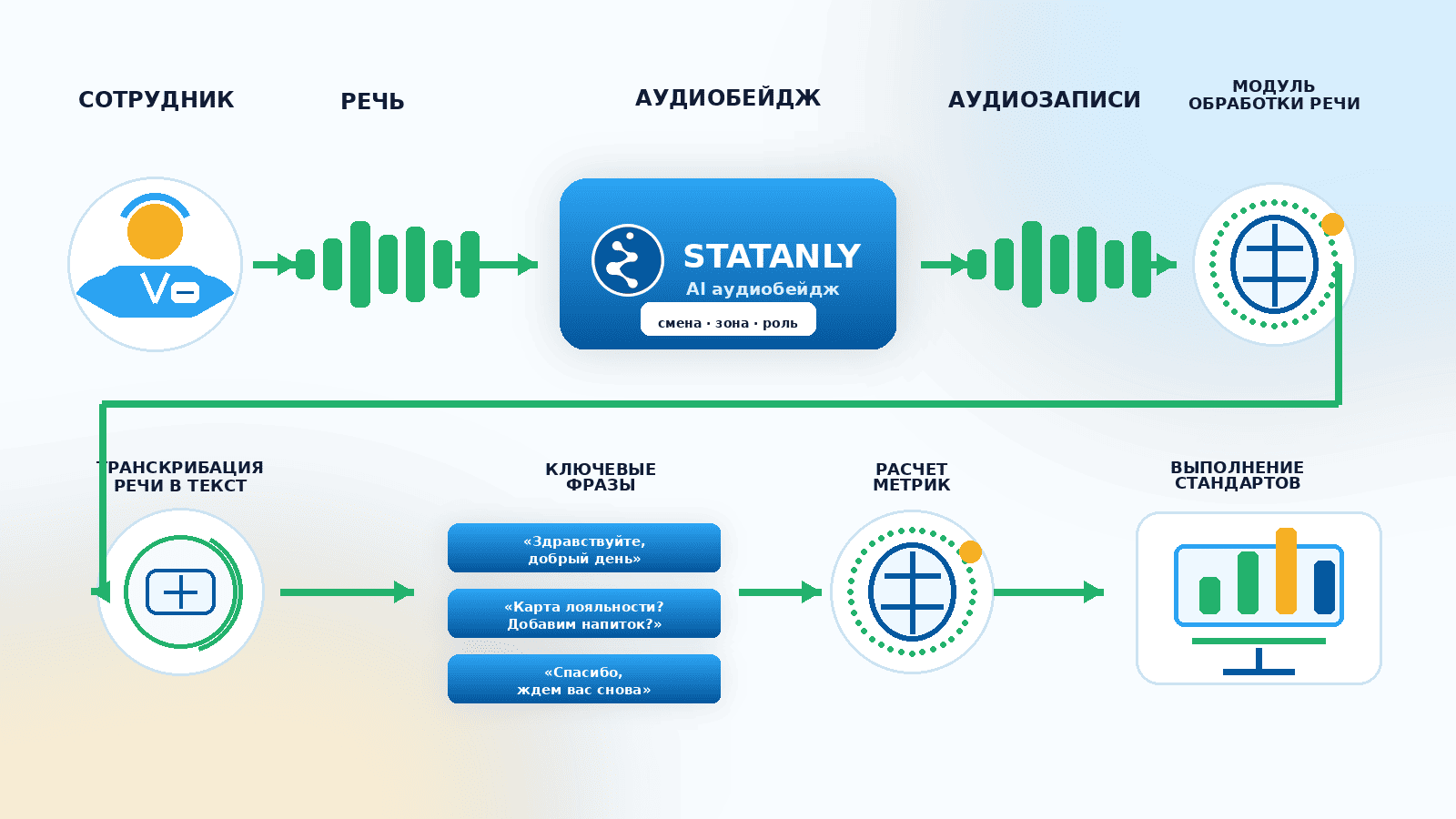
The audio module checks not cash operations, but the dialog with the guest itself: greeting, consultation, upsell offer, correct wording, absence of stop phrases and service completion.
Typical losses occur at pickup: the dish is not prepared to the standard, an ingredient is missing, the order waits too long or a hot dish cools down.
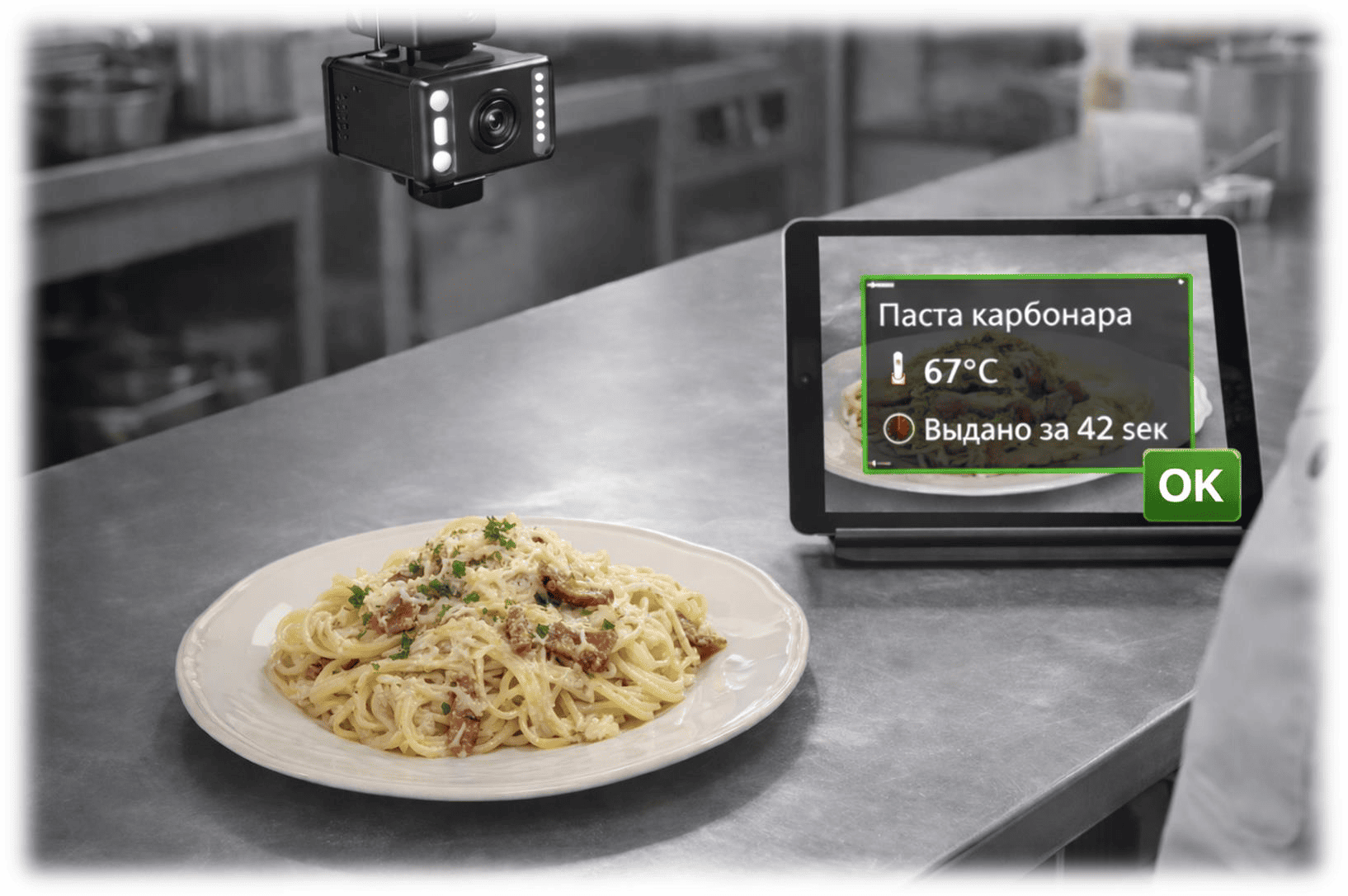
Checking presentation, ingredients, garnish, decoration and visual deviations.
An event is created if a dish stays at pickup longer than allowed.
Checking order contents and key elements before handoff to the guest.
Control of temperature deviations and delays between preparation and pickup.
The interface separates operational work and management analytics: the operator processes events and evidence, while the manager reviews dynamics, SLA, statistics and location comparisons.
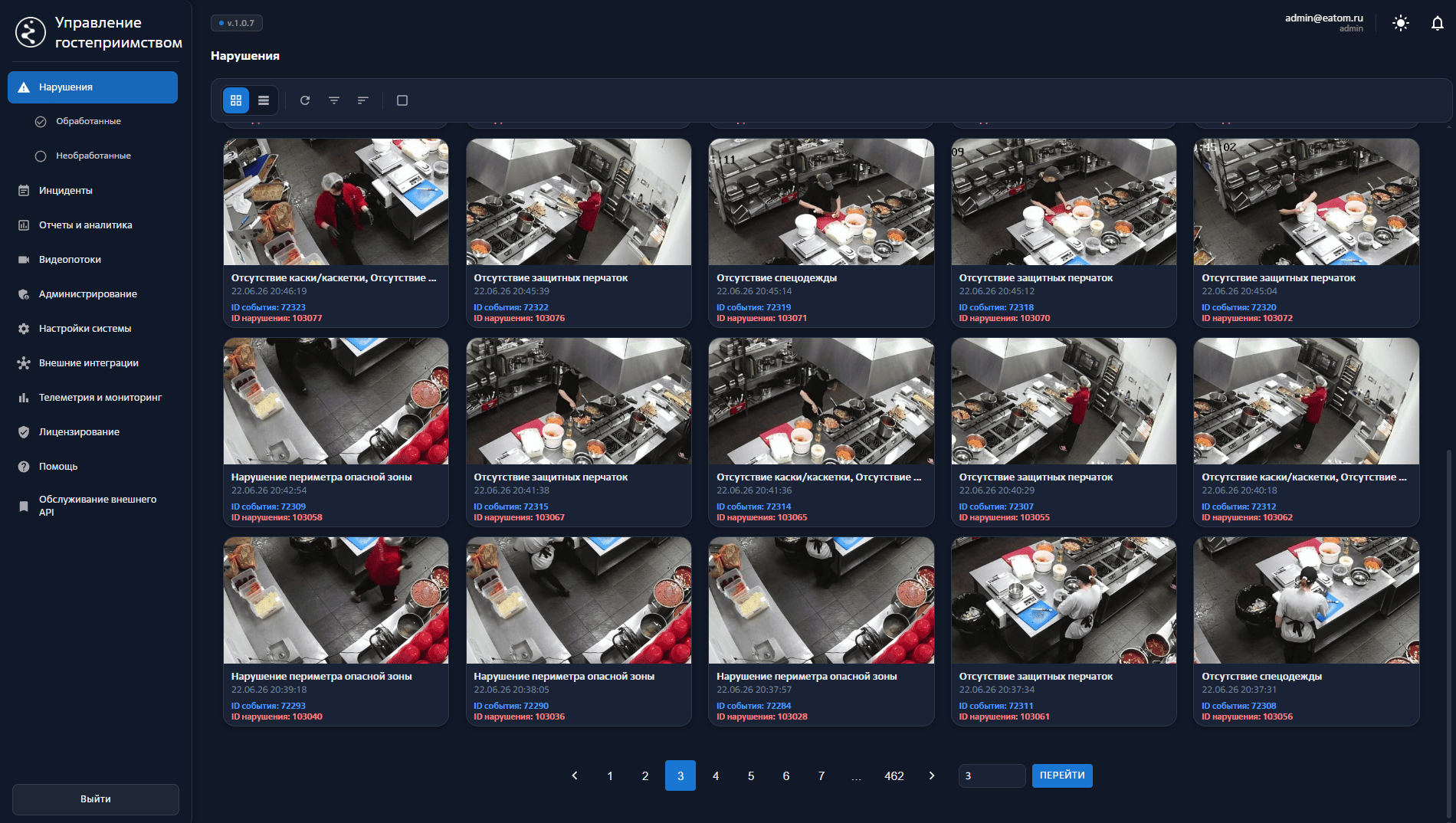
A unified event feed with filters by restaurant, zone, status, violation type, employee and time.
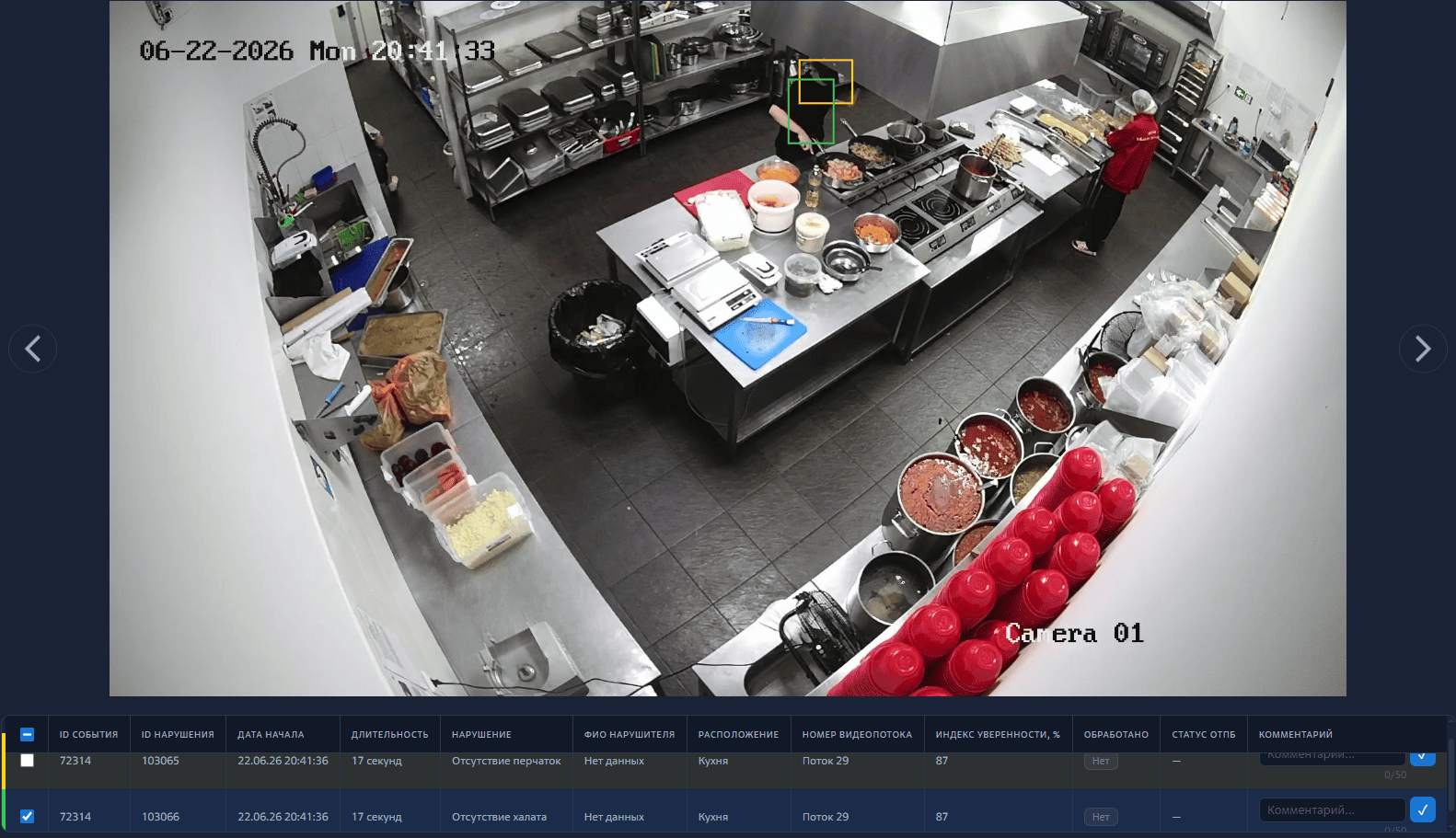
Evidence frame, video clip, event ID, time, camera, responsible person and processing history.
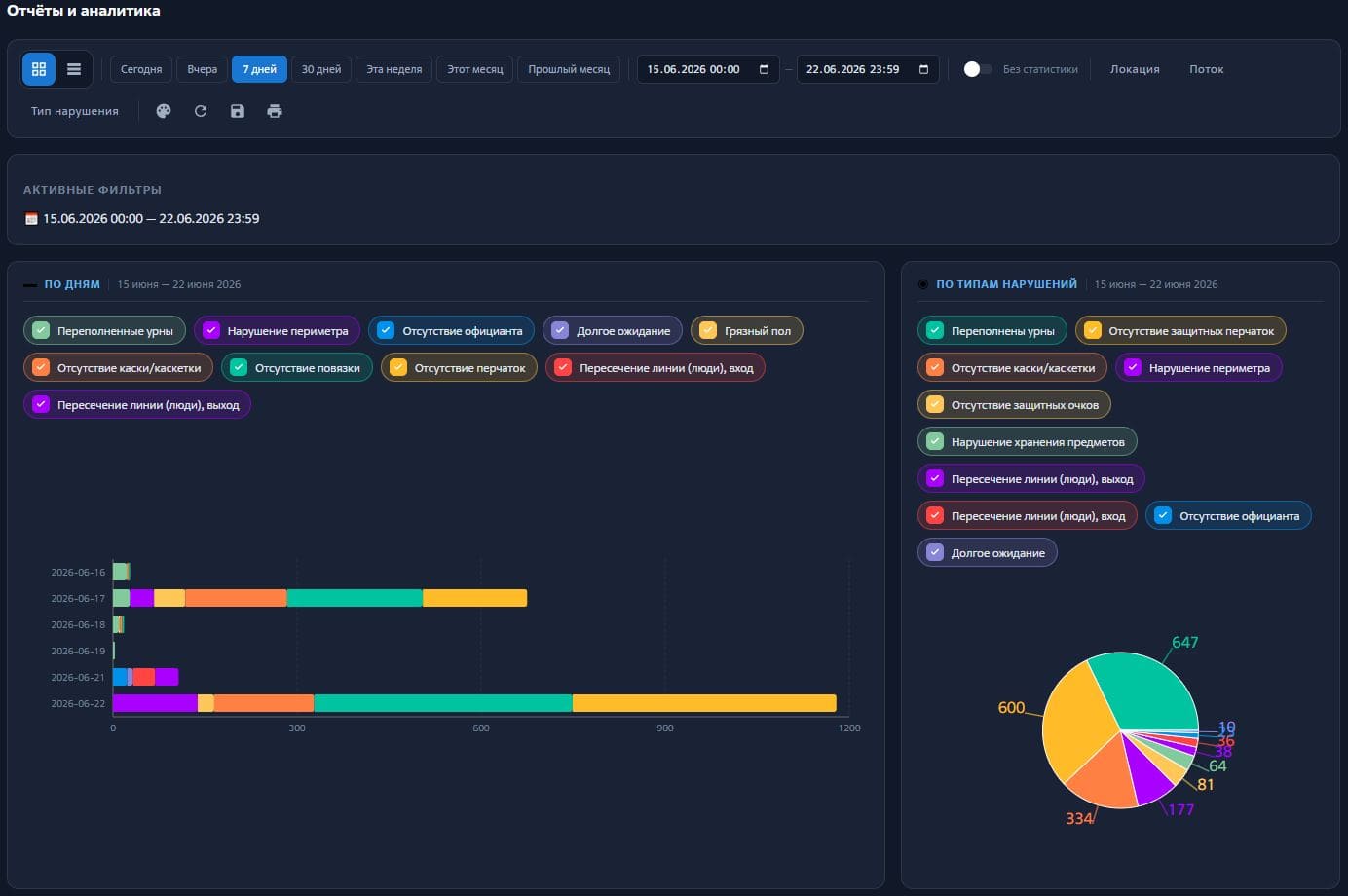
Queues, cash desk, kitchen, pickup, tables, staff and SLA in one manager view.
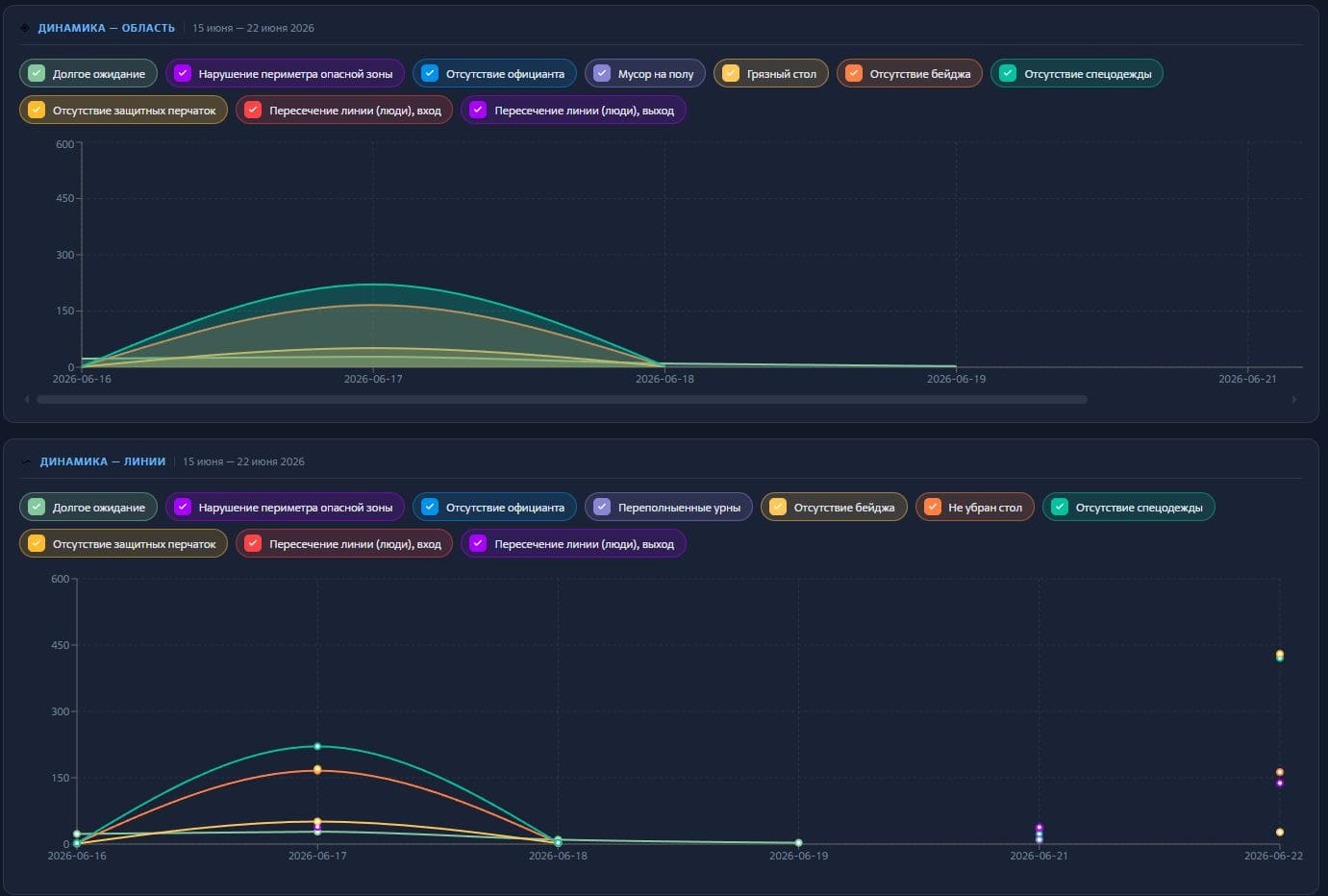
Comparison of locations, shifts and teams, violation trends, service dynamics and management reports.
The project can start with one location and a limited detector set, then expand scenarios, zones and integrations.
For the first stage, we select 3-5 scenarios where results can be easily checked by video, events and KPIs. After the pilot, we add new detectors and scale the solution to the network.
We define the hall, kitchen, cash desk, pickup and service control points.
We connect core scenarios to existing IP cameras without purchasing new equipment.
We configure the journal, notifications, roles, dashboards and management reports.
We connect new restaurants, AI scenarios, integrations and a unified Control Tower.
Fast connection, cloud reports, events, notifications and centralized analytics.
Deployment on the customer's internal infrastructure: server, roles, archive, reports and integrations.
A combination of local processing, cloud analytics and a gradually expandable model library.
The platform supports a module library and tools for adding new models: new dish classes, violations, service events, zones, rules and reports can be expanded as the network develops.
Events and KPIs can be sent to POS, CRM, BI, 1C, iiko, r_keeper, Telegram, Email, SMS and internal network management systems.
Documents covering software use, administration, installation and operation.
All prices are in Russian rubles.
Use the calculator to estimate your cloud subscription cost.
We will select 3-5 pilot scenarios: pickup, queue, cash desk, kitchen, staff or guest journey. After the pilot, we will scale to the network.