Handover disputes
It should be possible to quickly prove what was handed to the customer, the item condition and what happened during opening.

An AI supervisor for pickup points: handover and intake control, returns, queues, storage, operator work, marketplace standards and dispute cases with evidence frames.
Pickup points usually already have cameras, but they remain a passive archive. When a customer says the wrong item was handed over, a return becomes disputed, a parcel disappears from storage or the operator leaves during peak load, the owner has to search video manually and often still lacks the full event context.
It should be possible to quickly prove what was handed to the customer, the item condition and what happened during opening.
Return fraud, parcel substitution, disputed defects and ambiguous actions at the desk require contextual video.
The employee accepts deliveries, serves customers, searches for orders in storage and keeps the point in order at the same time.
Queues, disorder in the hall, absent staff, storage zone violations and broken procedures become a risk for the point.
Video analytics moves surveillance from archive to operations: the system captures events, attaches frames, calculates KPIs and sends a signal to the owner, manager or security team.
Order handover, courier intake, opening, package damage and item condition.
Unauthorized access, missing parcels, item movement, open storage zones and night events.
Visitor count, queue length, peak hours, waiting time and need for a second service line.
Staff presence, hall order, clear passages, foreign objects, signage, cleanliness and procedures.
Modules can be enabled step by step: first the clearest losses, then storage, standards, staff, integrations and a unified network control center.
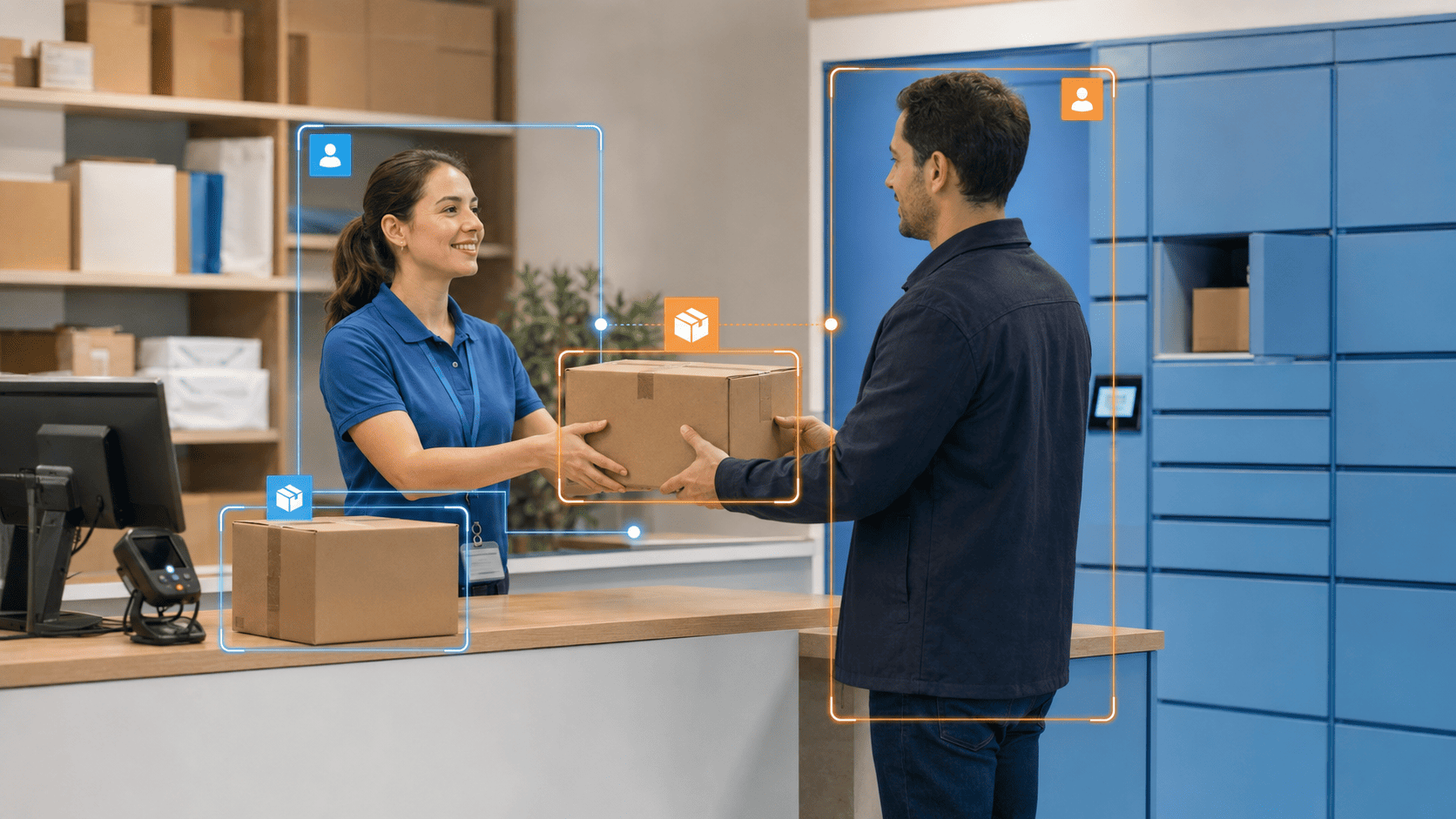 Handover
Capturing handover, opening, courier intake, package damage and dispute cases.
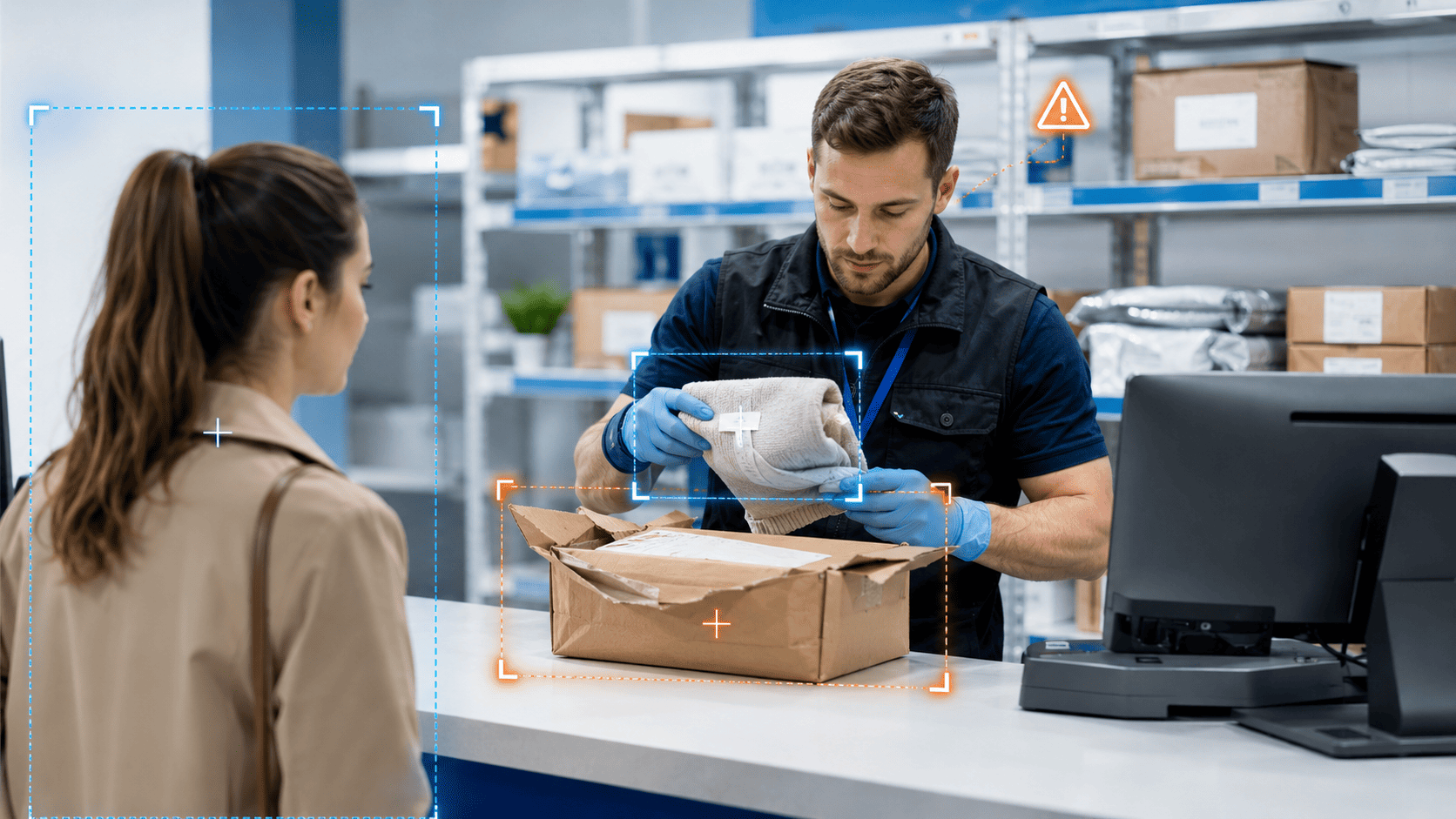 Returns
Parcel substitution, false defect claims, item mismatch, disputed return and evidence base.
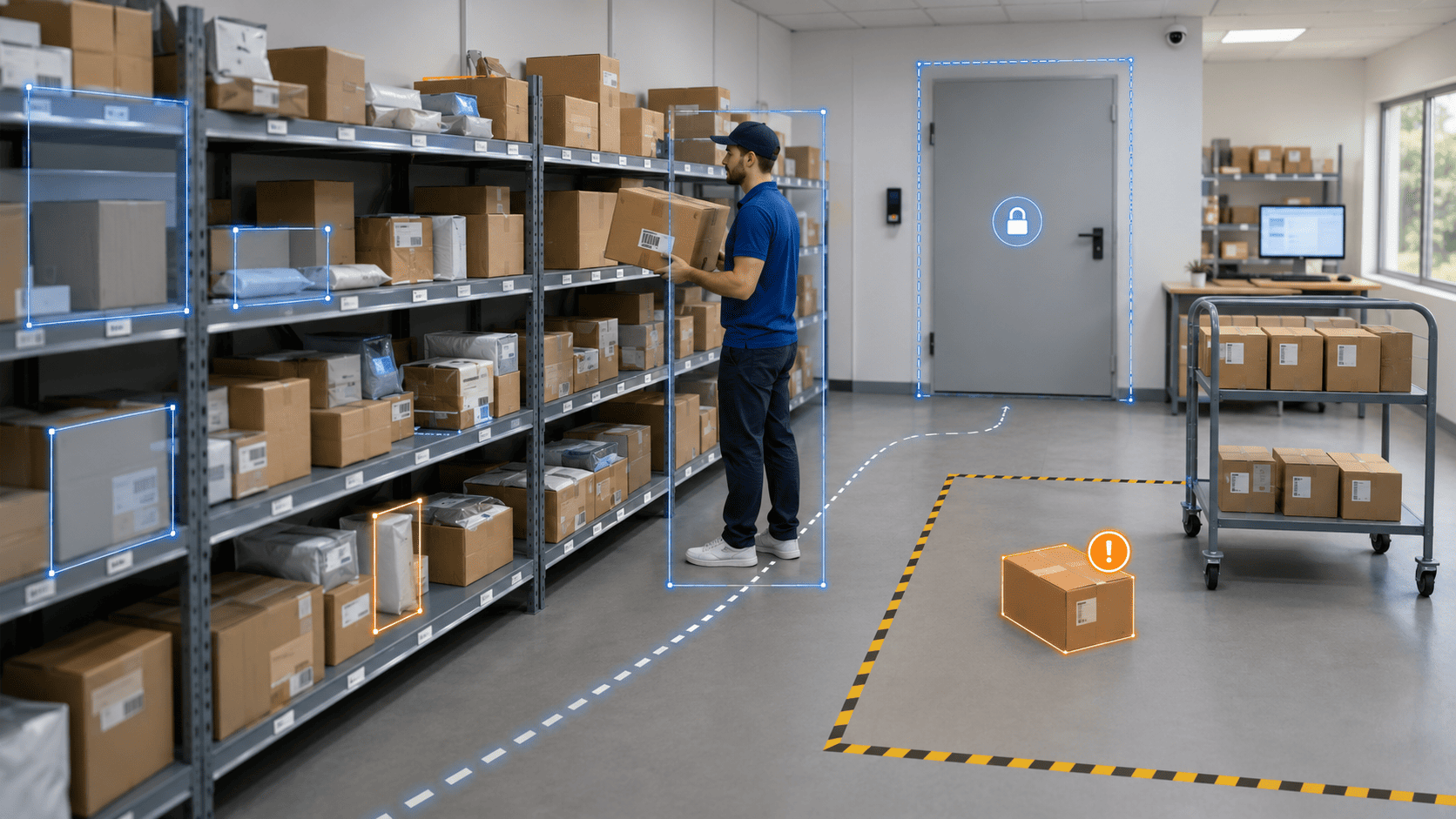 Storage
Unauthorized access, parcel movement, shortages, batch intake and restricted zone control.
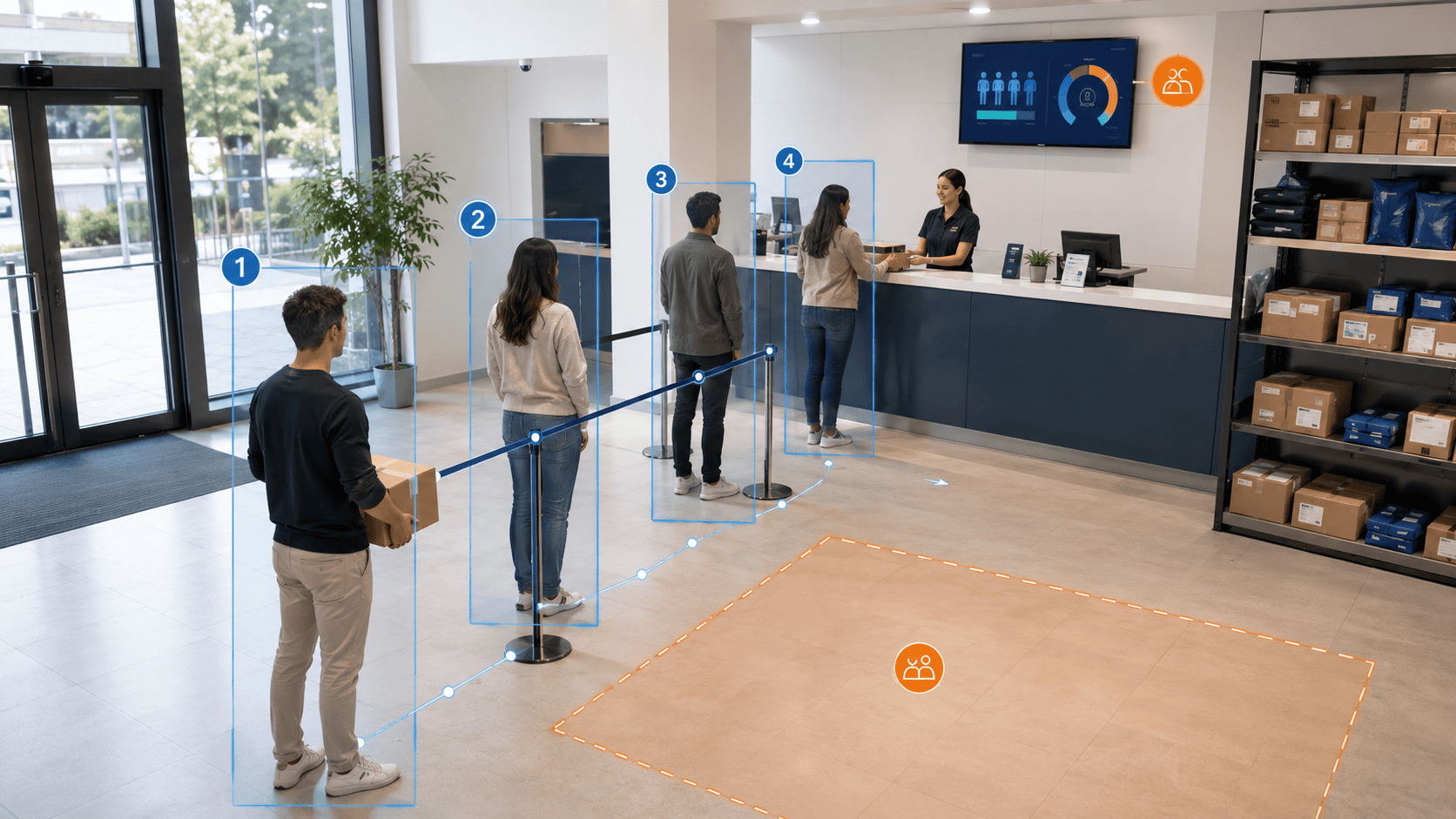 Queue
QueueVisitor counting, queue length, waiting time, peak load and service SLA.
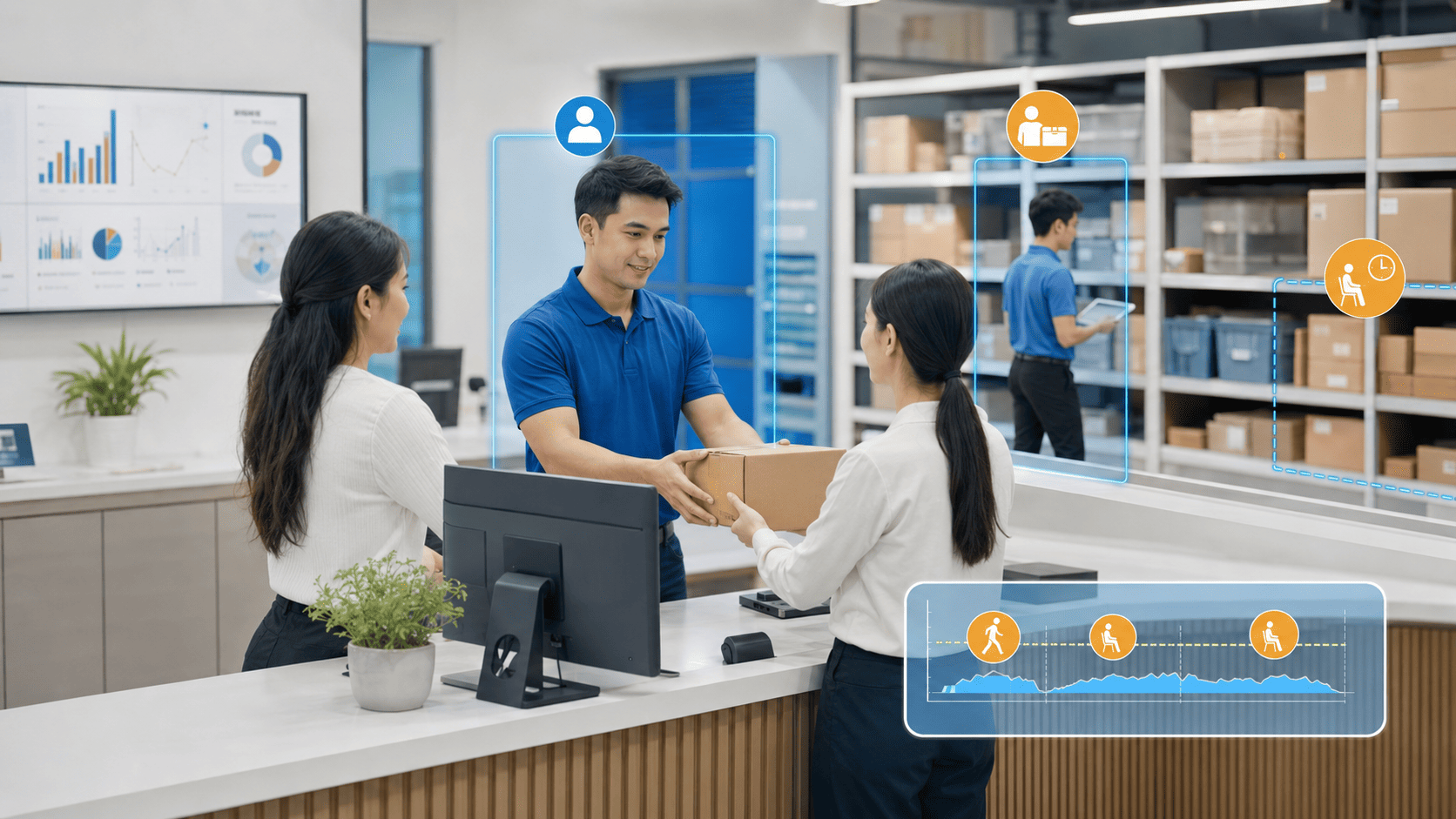 Operator
Presence, absences, late arrivals, phone use, work zones, activity and shift KPIs.
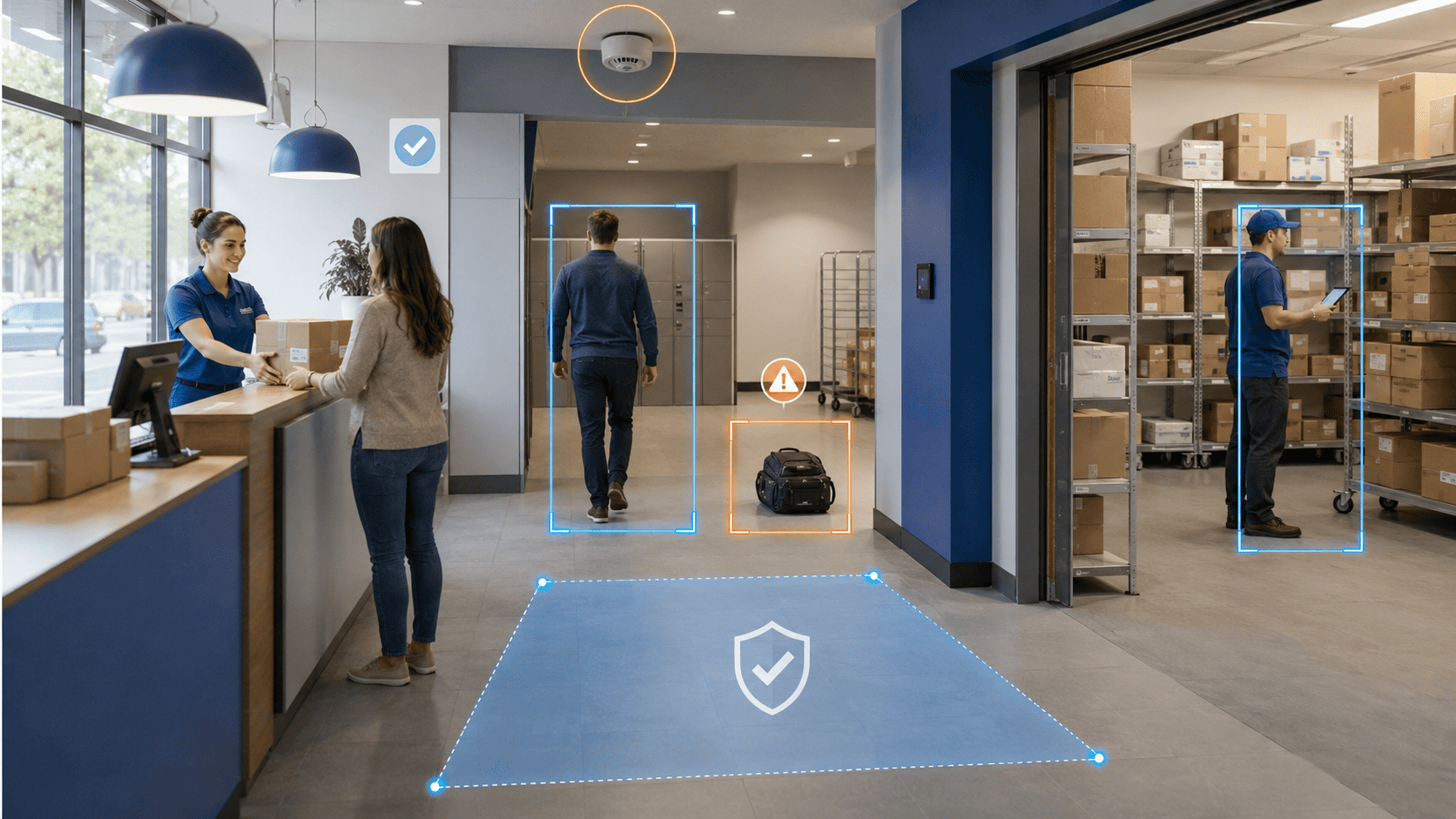 Standards
Hall order, passages, foreign objects, smoke, fire, conflict, signage and procedures.
The system captures key service moments: order intake, customer handover, opening, item inspection, package damage and unusual actions at the desk.
A return at a pickup point often becomes a word-against-word dispute. AI helps preserve context: who brought the item, how it was inspected, what was in the box, whether there were signs of substitution and how the operator processed the procedure.
For a pickup point owner, storage often remains the least transparent area: items arrive in batches, are stored in limited space, move between shelves and are handed over under high load.
The system counts visitor flow, queue length, waiting time and operator load. The manager sees when a point needs a second service line, schedule changes or an additional employee.
AI helps monitor not people for the sake of control, but the operating standard of the point: the employee is present, the service zone is covered, the queue does not grow, storage is not left unattended and violations do not repeat endlessly.
Capturing operator absence from the desk, long departures and an empty service line.
Late arrivals, early departures, breaks, shift activity and point comparison.
Procedure violations during customer service or batch intake.
Time at the desk, repeated delays, peak hours and employee load.
Routes, frequent departures, order search, access to restricted zones and performed operations.
Uniform, badge, workplace order and customer service standards.
Increased activity, crowding, unusual behavior and quick video search.
Review of recurring violations with frames, video and clear comments.
The platform records the state of the point continuously, not once a week during an inspection: order in the customer area, clear passages, staff presence, foreign objects, smoke, fire, conflict and other events.
The basic pickup point setup does not require biometrics: the system analyzes events, zones, actions, queues, parcels and procedures. Face recognition can be added separately only when there is a legal basis and a clear scenario.
The operator sees current events, the manager sees the causes of problems, and the network owner compares points by queues, handover, returns, storage, staff and standards.
Comparison of pickup points by queues, disputed handovers, returns, storage, operator activity and standards level.
Filters by point, zone, camera, event type, status, shift, employee and time.
Evidence frame, video clip, time, camera, zone, owner and handling history.
Trends in load, dispute cases, returns, shortages, shift work and service quality.
The first stage should not try to do everything at once. It is better to run a measurable pilot on real cameras: take 3-5 scenarios, configure events, check quality and calculate the effect.
For the first point, the handover desk, entrance and storage are usually enough. After the pilot, new cameras, points, roles, notifications, reports and scenarios are connected.
We define the desk, entrance, storage, check area, fitting area and the point's main losses.
We take RTSP / ONVIF from existing cameras and configure zones and event thresholds.
We create the log, notifications, handling statuses, dashboards and access rules.
We connect the pickup point network, new scenarios, integrations and a unified control center.
Fast launch, unified network analytics, notifications and reports without own server infrastructure.
Deployment inside the customer environment: server, roles, archive, events, reports and integrations.
Local processing of sensitive video plus centralized analytics, updates and model development.
The platform supports adding new classes, events and rules: unusual packaging, new zones, specific marketplace procedures, rare conflict situations and network-specific risks.
Events and KPIs can be sent to VMS, Telegram, Email, SMS, BI, CRM, 1C, WMS, internal network management panels or marketplace process APIs.
We will select 3-5 pilot scenarios: handover, returns, queue, storage, operator or pickup point standards. After the pilot, we scale the solution to the network.